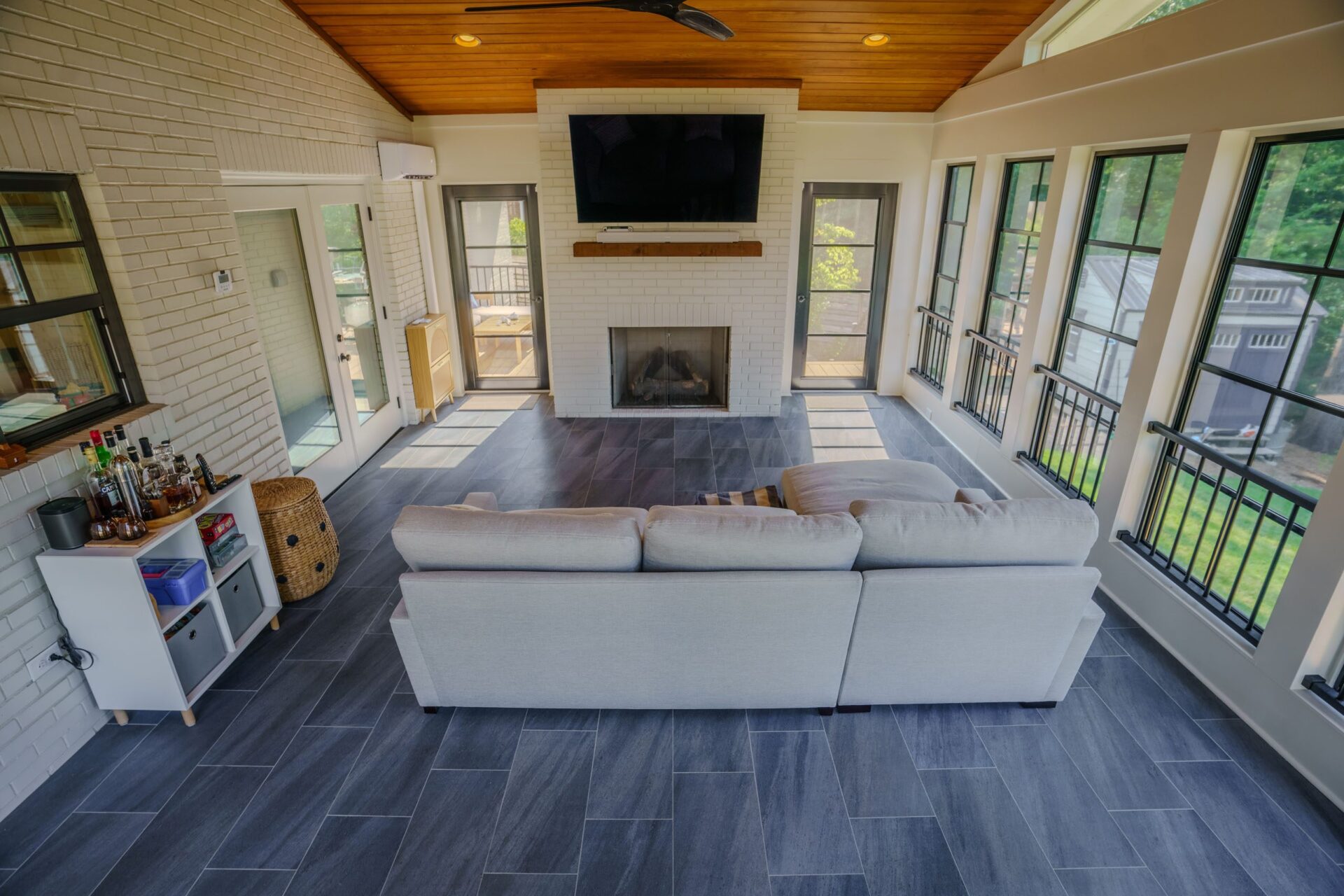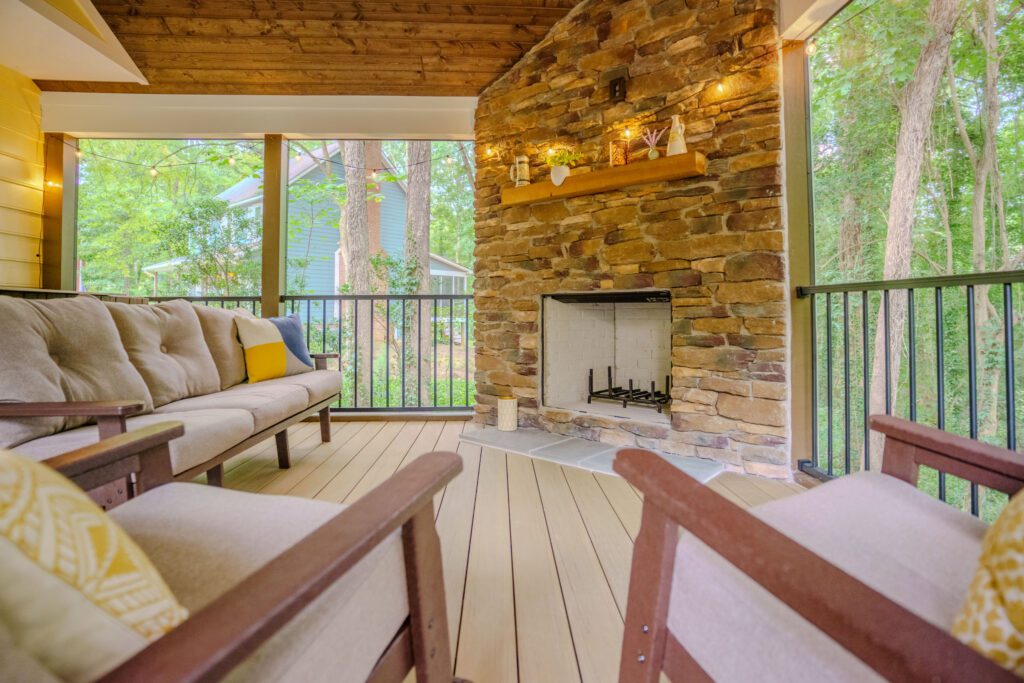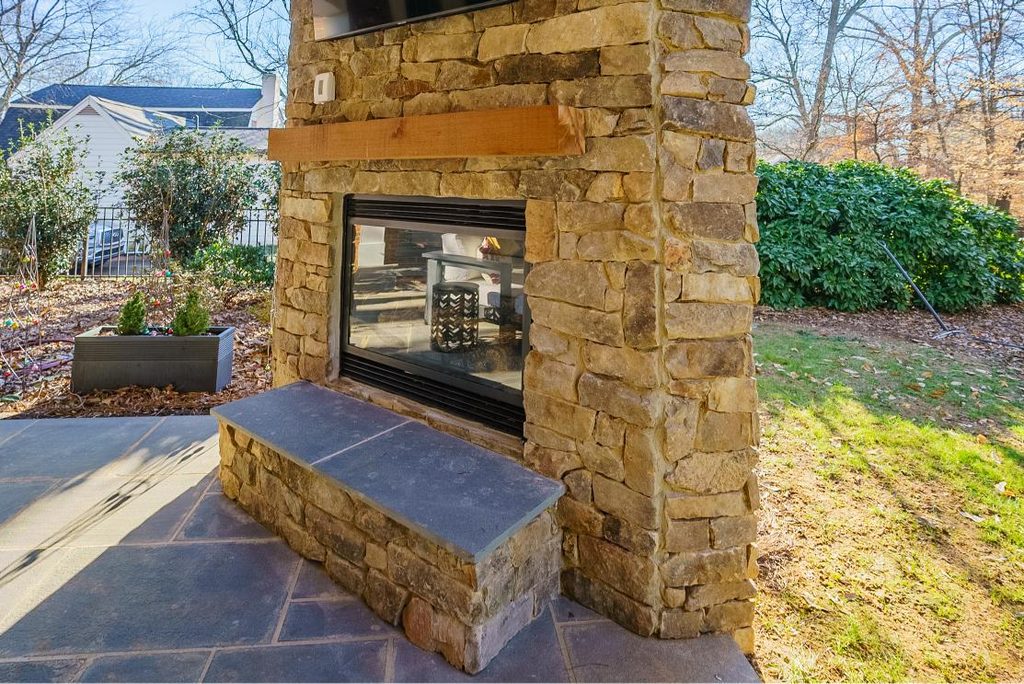

They Had an Outdoor Space That Wasn’t Working on Either Level. Here’s What We Built Instead.

When an outdoor space has deteriorated to the point where starting fresh makes more sense than saving what’s there, a full custom build isn’t just the better investment,  it’s often the only one that actually solves the problem. Our project in Stonehaven is a good example of what that looks like.

What they had and why starting over made sense

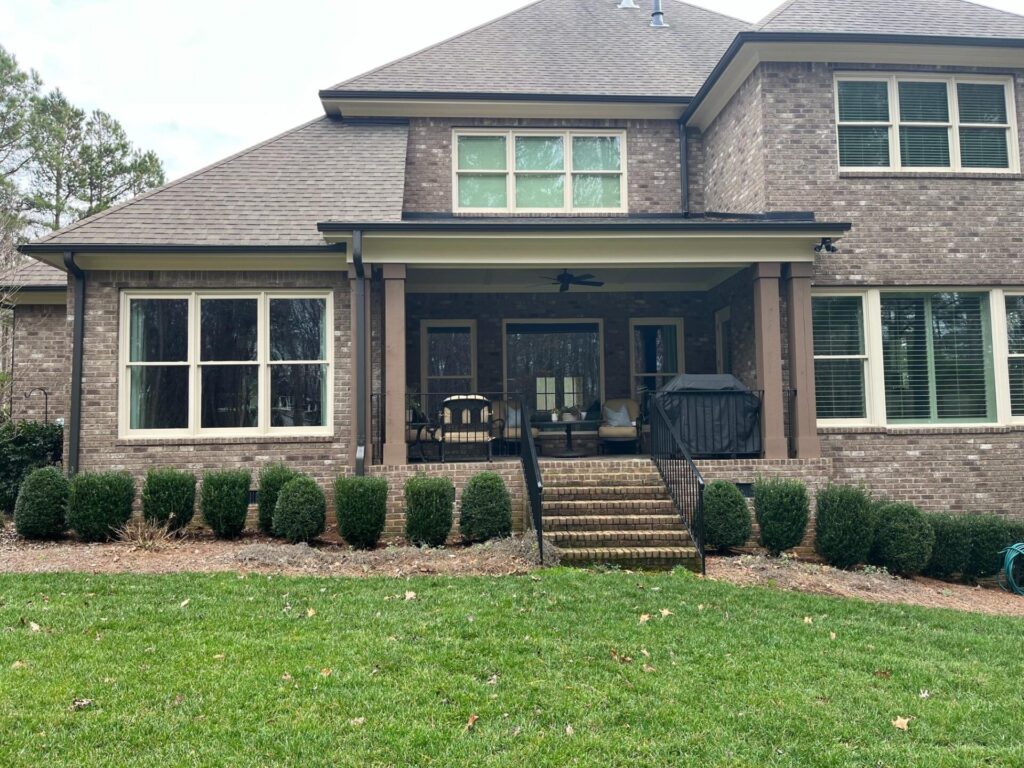
The house had two levels of outdoor space and neither one was being used. On the lower level, a concrete slab that had cracked and stained its way past any cosmetic fix and was chalky, tired, and collecting leaves. Above it sat a wood deck that had been through too many Charlotte summers: boards gone soft, structure questionable, a canvas awning that sagged more than it shaded. The whole thing had that feeling of a space the family had mentally checked out of.

They weren’t wrong to check out. It wasn’t working. The key decision: to patch it or build something worth having

New builds are what we do best at Carolina Decks, and this is exactly the kind of project that shows why. Patching a failing outdoor space can buy time, but it rarely gets homeowners where they actually want to go. For this family, the structure wasn’t worth saving. More importantly, they’d already spent years working around a backyard that didn’t work. The better question wasn’t “how do we fix this?” It was “what do you actually dream of being out here?”

What we built: two levels, done right

The answer turned out to be two distinct outdoor living zones built off the same structure, which is exactly what the house was always set up for but never delivered.

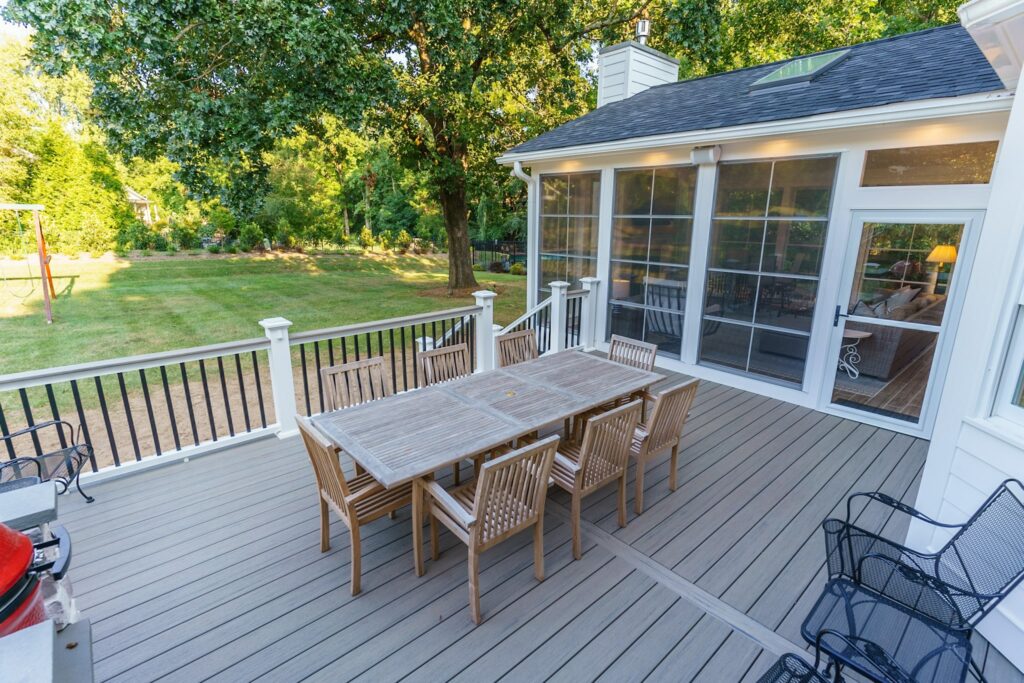
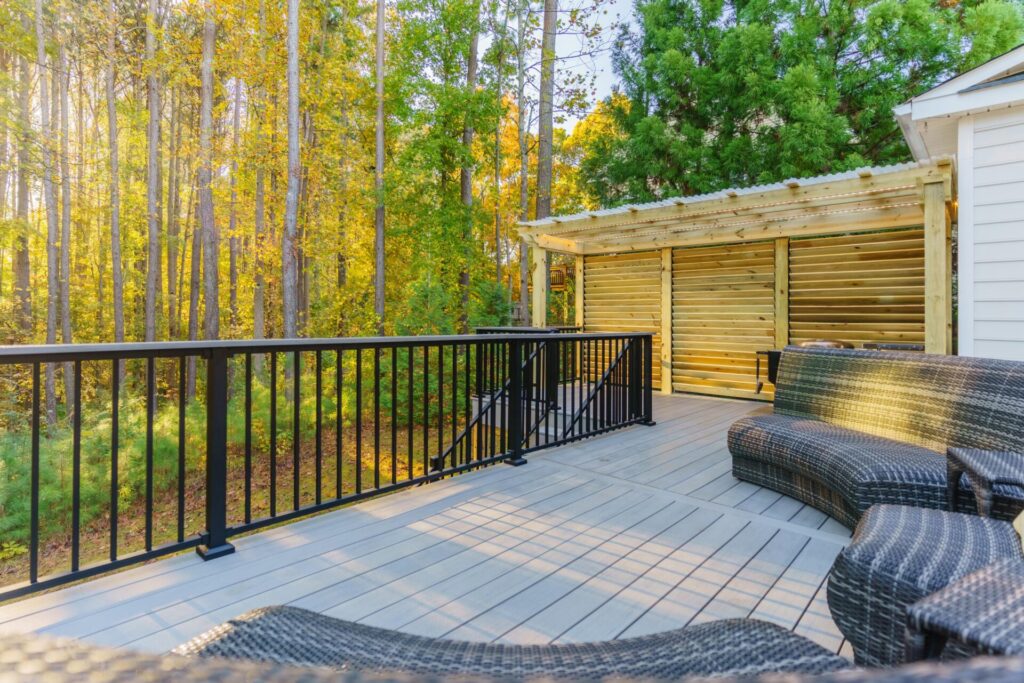
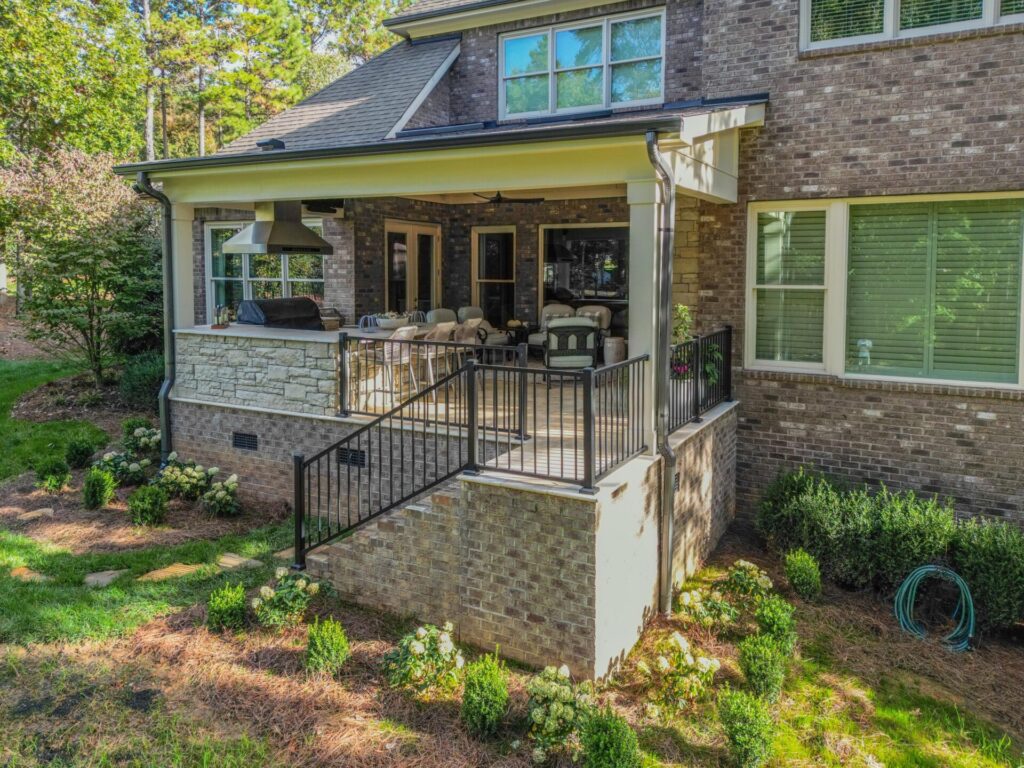
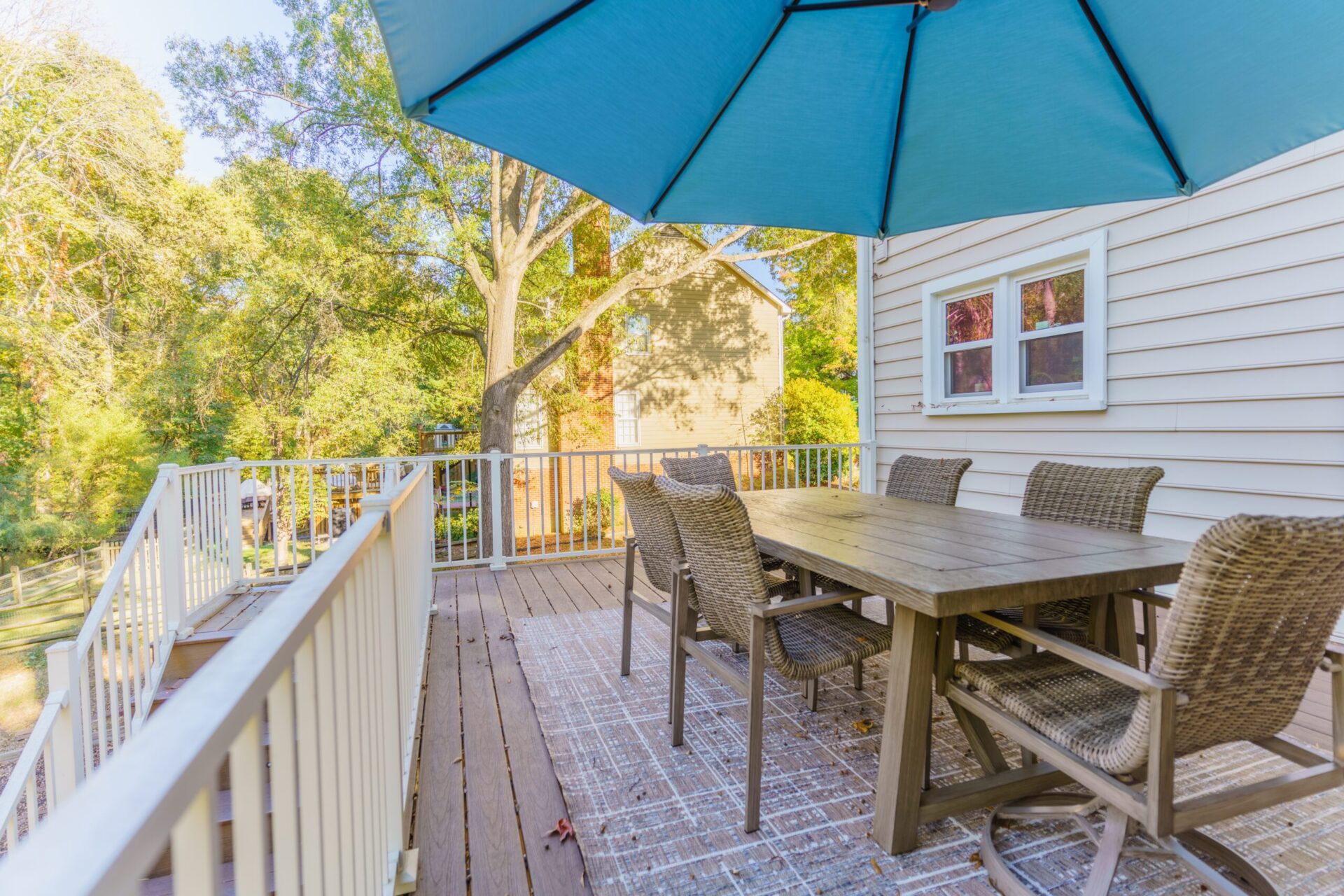
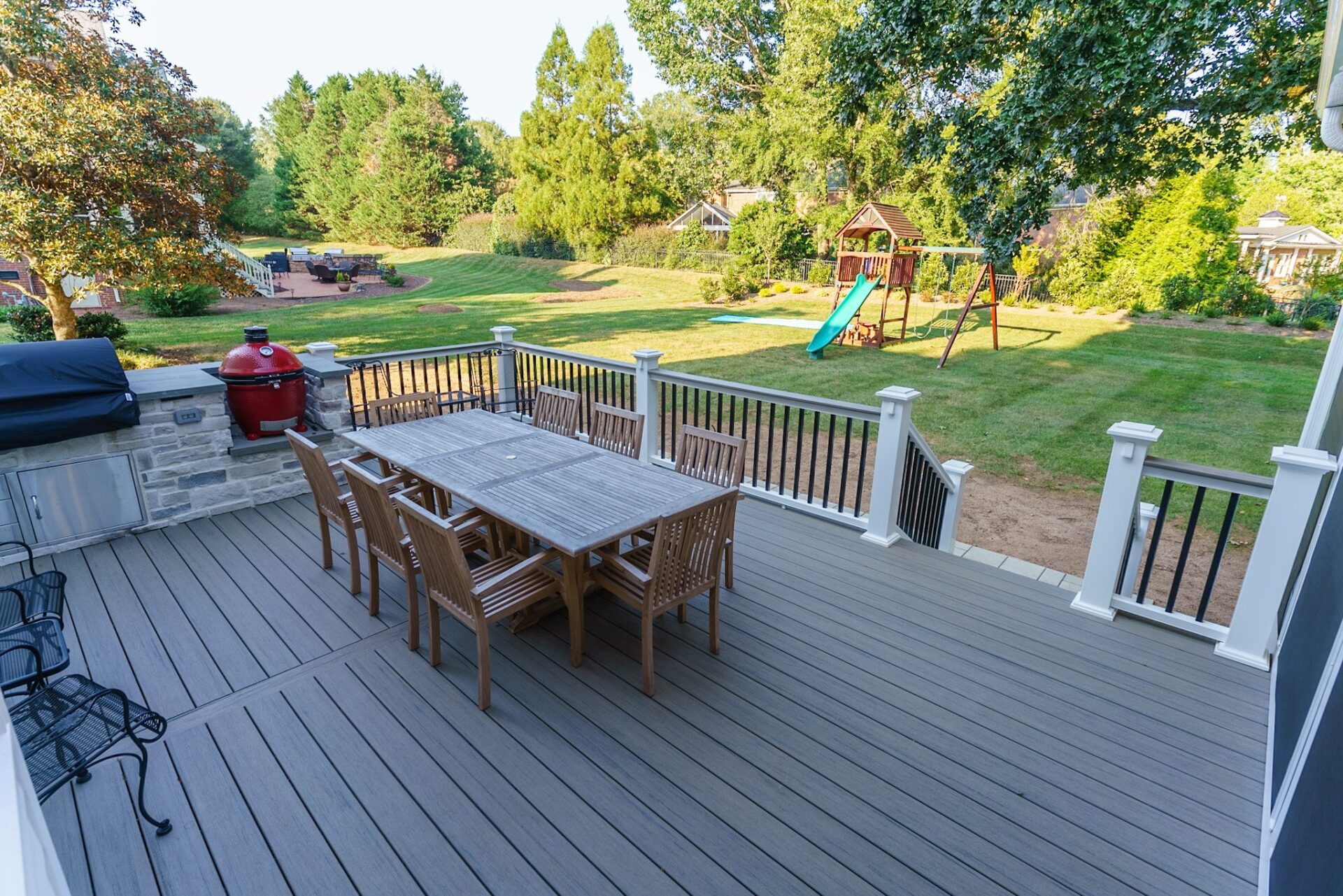
Up top: a new upper deck with TimberTech composite decking in Dark Roast and black Trex aluminum railing. The new deck features clean lines, stays low maintenance, and is built to hold up through Charlotte’s humid summers without the annual staining and sealing routine that wore out the old wood.

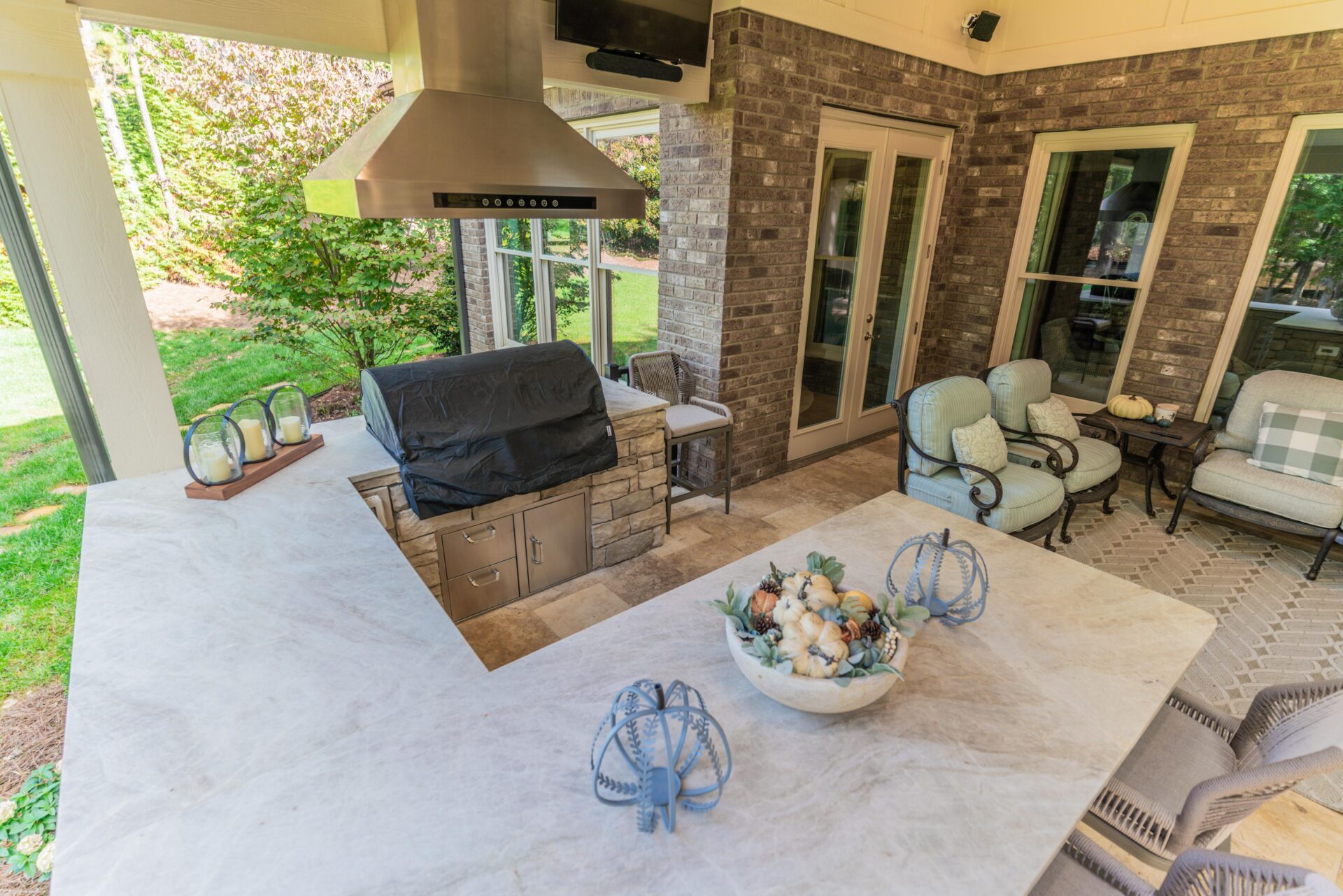
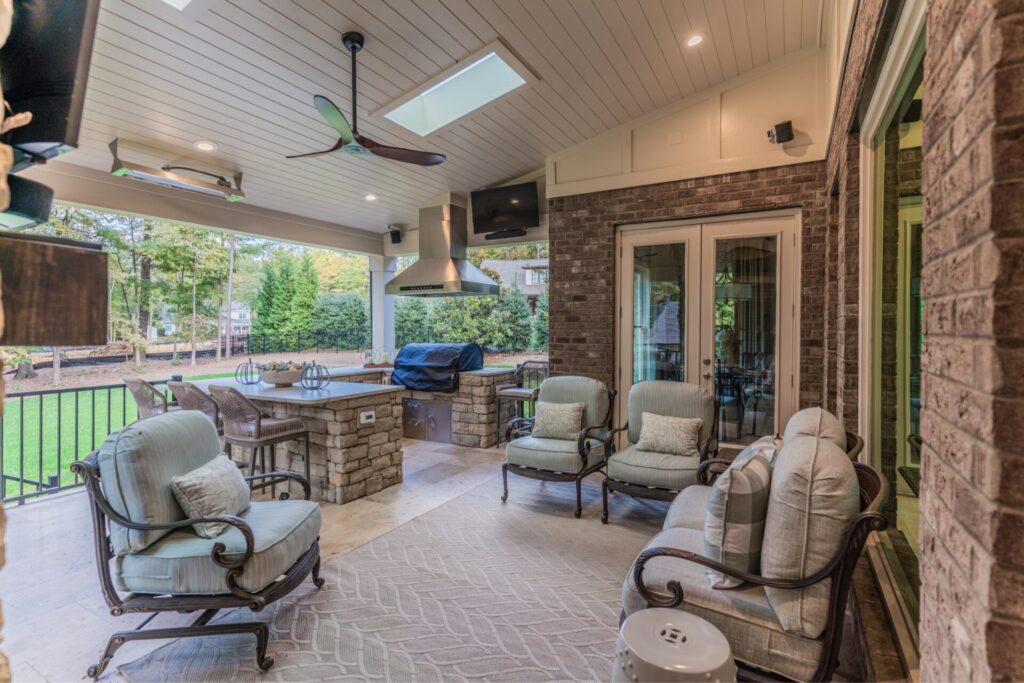
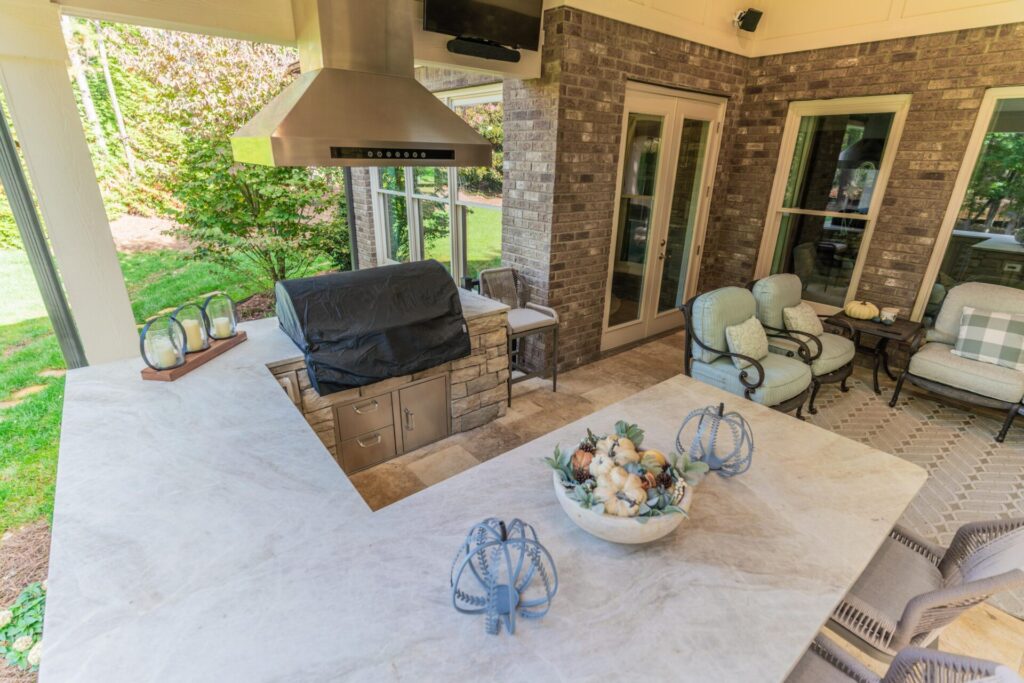
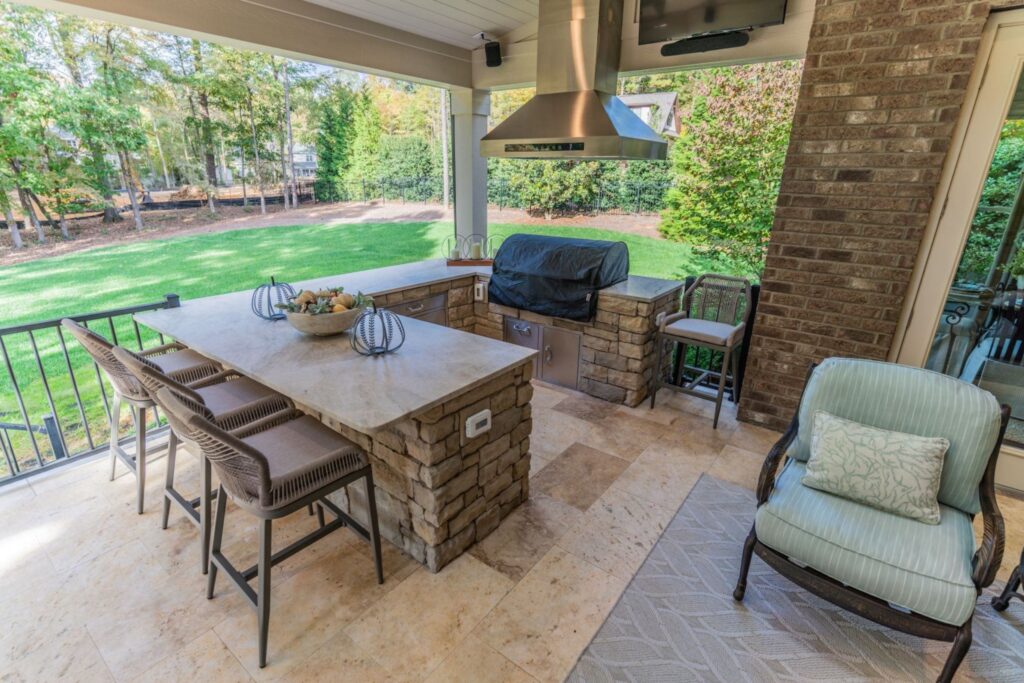
Below: the under-deck space became a proper covered patio: exposed timber framing, a rainproof ceiling system running between the joists, and a finished concrete floor that gives the lower level its own identity. When it rains, the upper deck drains away from the space below. Both levels stay usable.

The result

Two outdoor spaces where there was effectively zero before. The upper deck handles entertaining from morning coffee to evening grilling, the kind of space you actually point people toward when they come over. The covered patio below is its own space: shaded, dry, a place to sit even when the weather doesn’t cooperate.

Charlotte summers being what they are, that matters more than most people expect until they have it.

Project details:

Decking: TimberTech composite

Railing: Trex black aluminum

Levels: Upper deck + covered lower patio 

Lower patio: Exposed timber framing, rainproof ceiling system between joists, concrete floor

Columns: Natural wood

Multi-level solution: Two complete outdoor living spaces from one structure 

Custom builds are what Carolina Decks is built for. If your outdoor space has reached the point where you know something needs to change, that’s the conversation we love to have. Book a free estimate or call us at (980) 414-0320 and let’s talk about what’s possible.

After the Tournament, the Real Show Begins in Your Own Backyard

The Truist Championship just wrapped at Quail Hollow. Charlotte’s backyard season is officially open — is yours ready?


Something happens to Charlotte in early May. The azaleas are still blooming, the evenings have finally turned warm without the humidity hitting yet, and for one week every year, Quail Hollow Club puts the city’s south neighborhoods on a national stage. Neighbors grab tickets, coworkers tailgate in the SouthPark Mall parking lot, and for a few days the whole city is outside together, reminded of exactly how good it is to live in the Queen City when the weather cooperates.

And then it’s May 23rd. The tournament is over, summer is two weekends away, and a lot of Charlotte homeowners are standing in their backyards thinking the same thing: I really need to do something about this space.

That’s exactly where we like to start.


Charlotte’s Backyard Season Waits for No One

There’s a short, sweet window between the Truist Championship and the Fourth of July where the stars align for getting a custom deck or porch build done right. The weather is workable and the kids aren’t out of school yet. There’s still time, barely, to have a finished, inspected, beautiful outdoor space before the summer entertaining season hits full swing.

We’re not going to sugarcoat the timeline: custom builds take time. Quality materials have lead times. Permits through Mecklenburg County move at their own pace. And any crew worth hiring in this city is already booking out. If this has been on your list, the window to act is right now, not after Memorial Day.

“Every great backyard in this city started with someone finally making the call.”

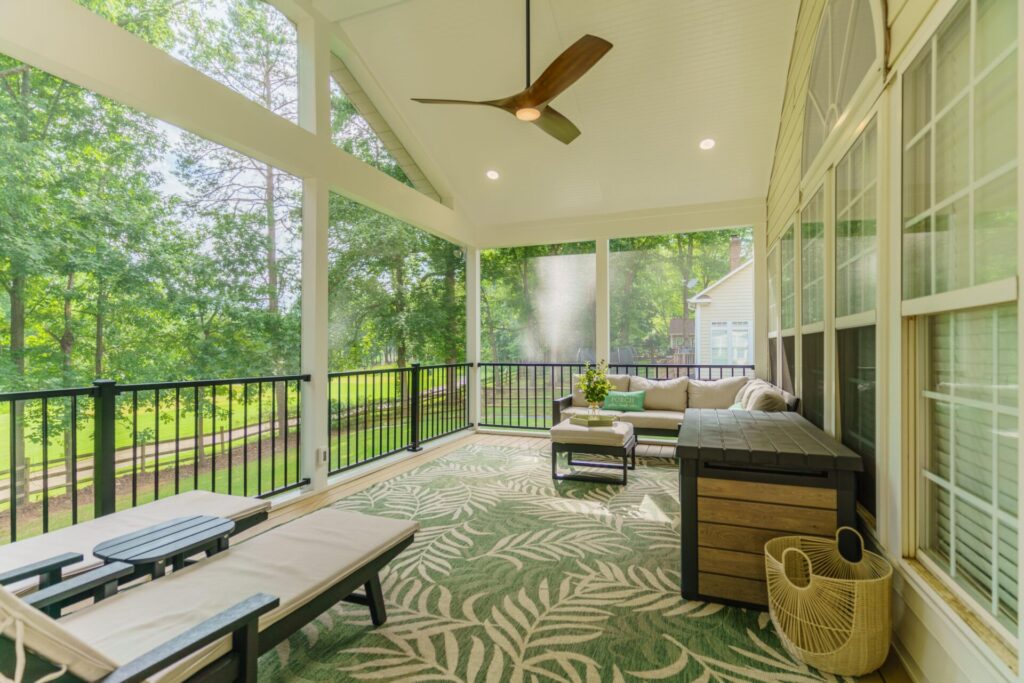
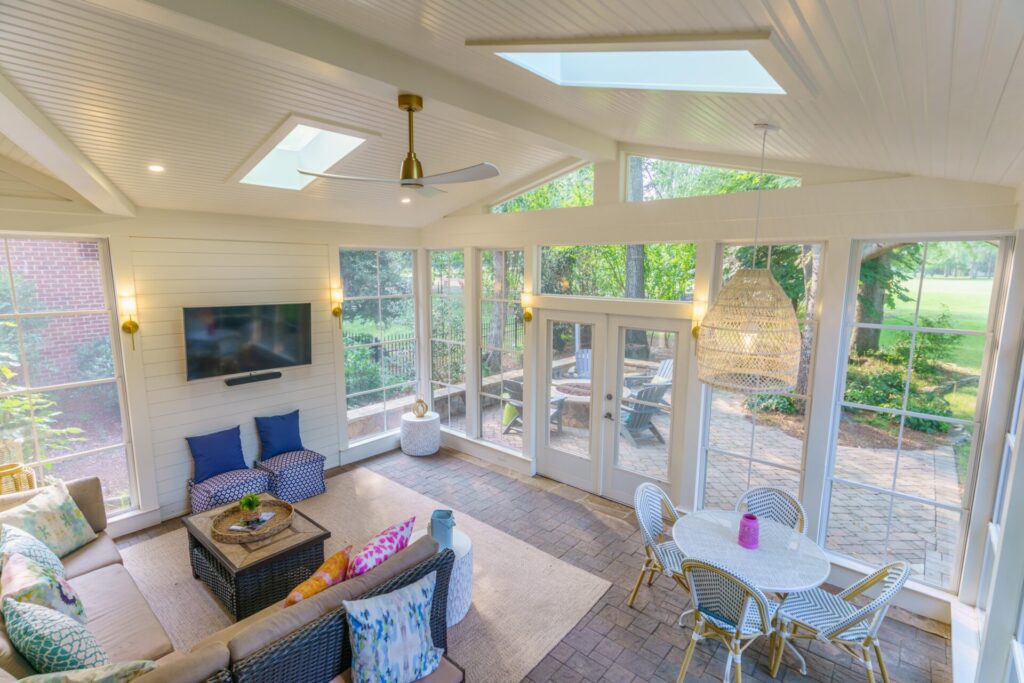
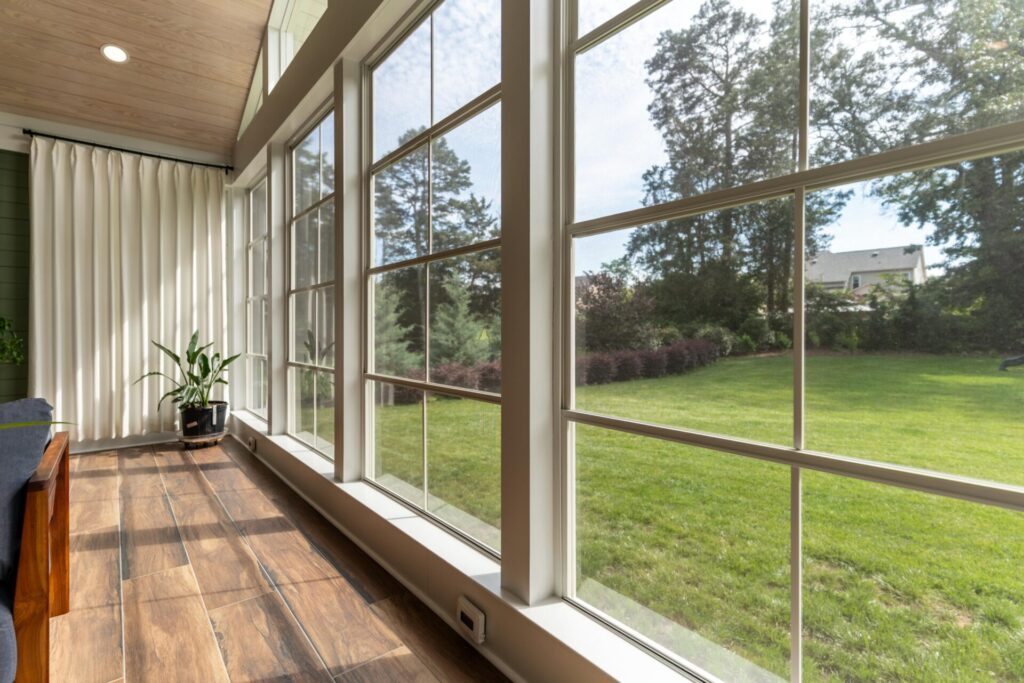
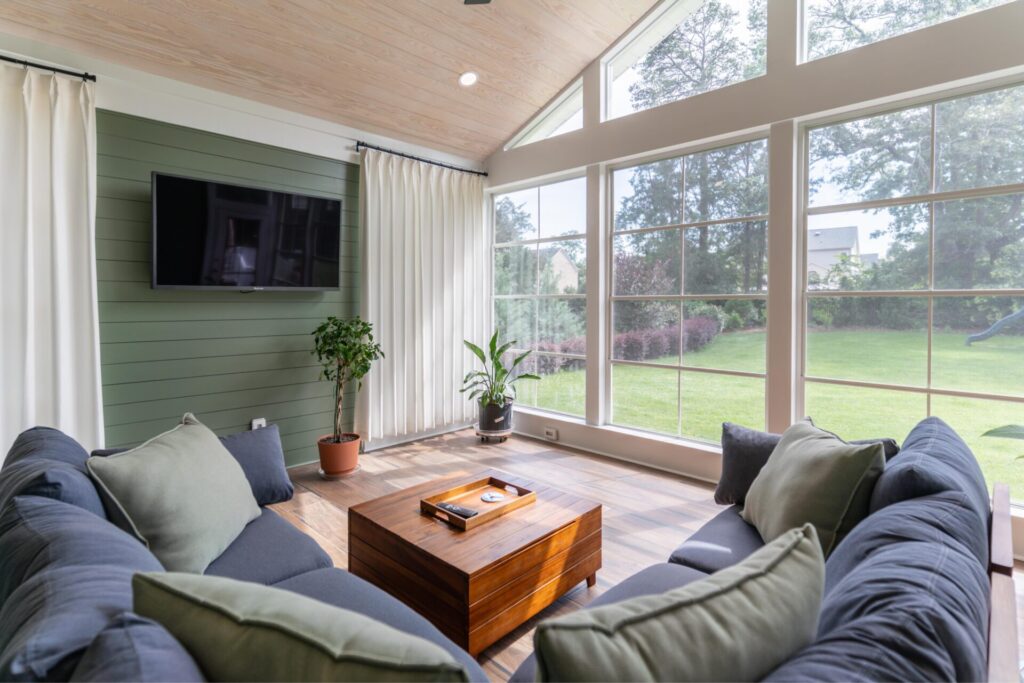
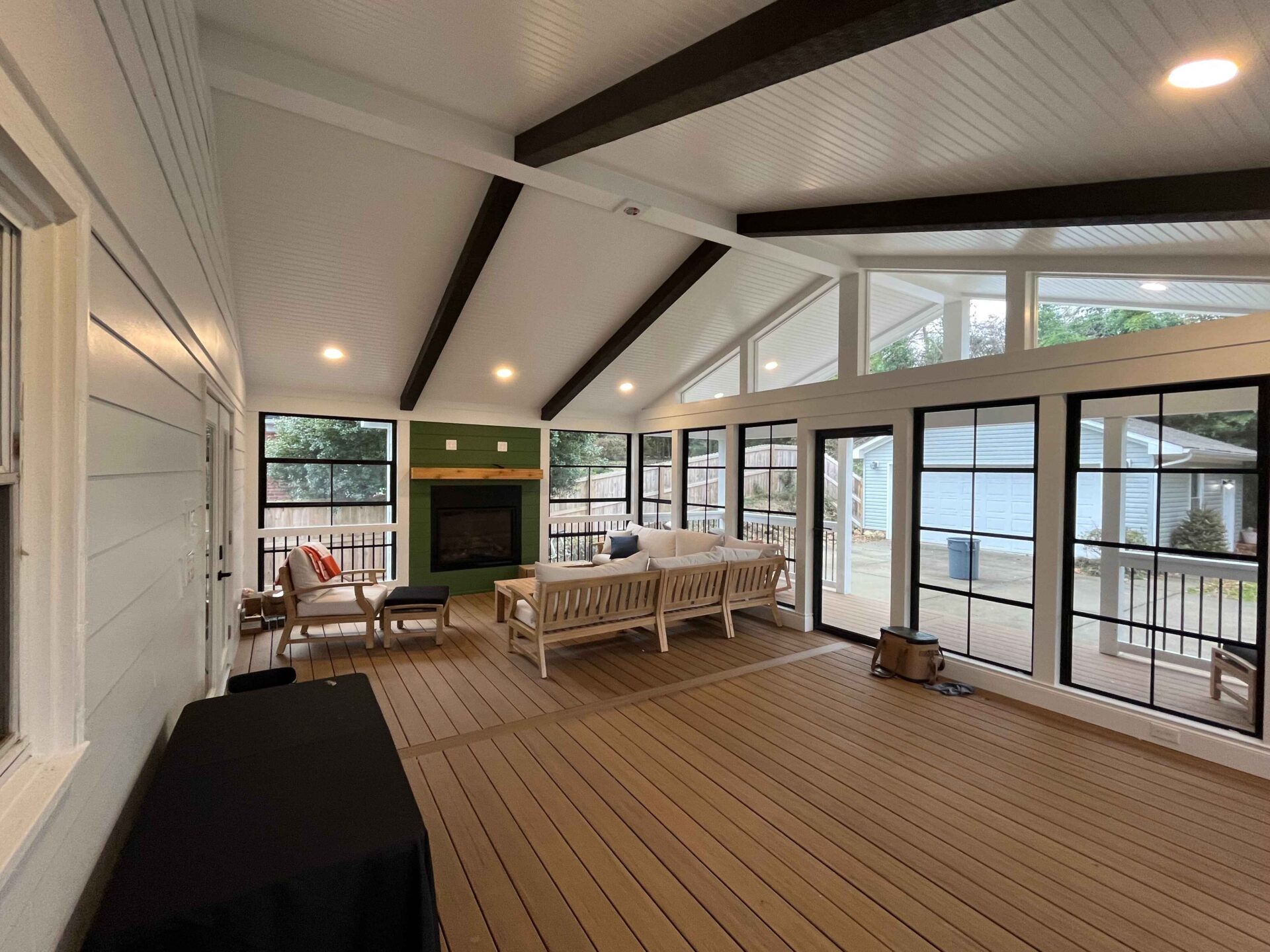
Spacious Screeneze screened-in porch in Providence Plantation, Southeast Charlotte, featuring a gray accent feature wall, vaulted ceiling with skylights, and premium composite decking in TechPrime and Dark Roast.

What Tournament Week Reminded Us All

One of the things we love about Truist Championship week is that it gets Charlotte outside. People who haven’t dusted off their lawn chairs since last fall are suddenly spending full days outdoors and remembering how good it feels. You reconnect with your neighbors. You notice the houses that have really invested in their outdoor spaces. And you come home and look at your own backyard with fresh eyes.

That’s not a bad thing, it’s motivation.

The neighborhoods surrounding Quail Hollow – Myers Park, SouthPark, Ballantyne, the communities stretching down toward Waxhaw – are full of homeowners who care deeply about their properties. We know our neighbors aren’t looking for a quick fix or a builder who’s going to cut corners on the framing. They want something designed thoughtfully, built to last, and finished to a standard that matches the rest of their home.

That’s the work Carolina Decks does.


What a Custom Build Actually Looks Like

Every project we take on starts with a conversation, not a sales pitch. We want to know how you live. Do you host big or small? Morning coffee or evening wine? Kids running in and out, or a quieter retreat? Do you want to grill under cover, or is the view the whole point?

From there, we customize the design for your lifestyle. This season in south Charlotte we’re building:

Multi-level decks that give families real separation between cooking, dining, and lounging so the whole space actually gets used instead of everyone crowding around the grill.

Covered structures and screened porches that push the Charlotte season earlier in spring and later into fall. A well-designed pergola or screen enclosure is the difference between a space you use three months a year and one you use eight.

Built-in lighting that means you’re not packing up when the sun goes down. Some of the best evenings on a Charlotte deck happen after dark.

All of it built with materials chosen specifically for our climate: composite decking that handles Carolina humidity, structural framing done right from the ground up, finishes that look as good in year seven as they did on day one.

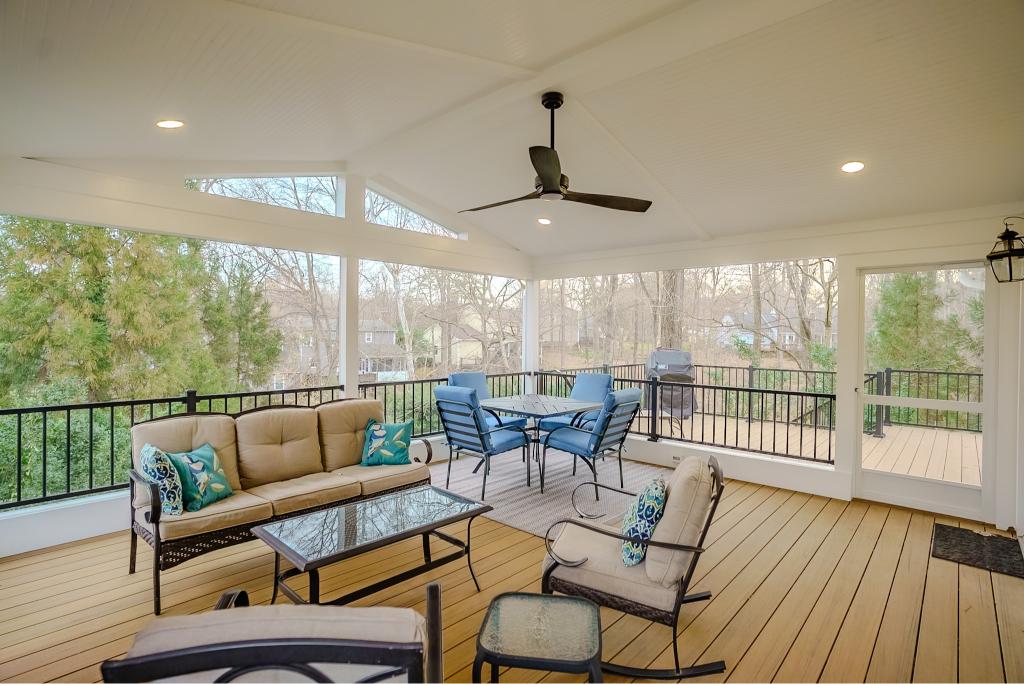
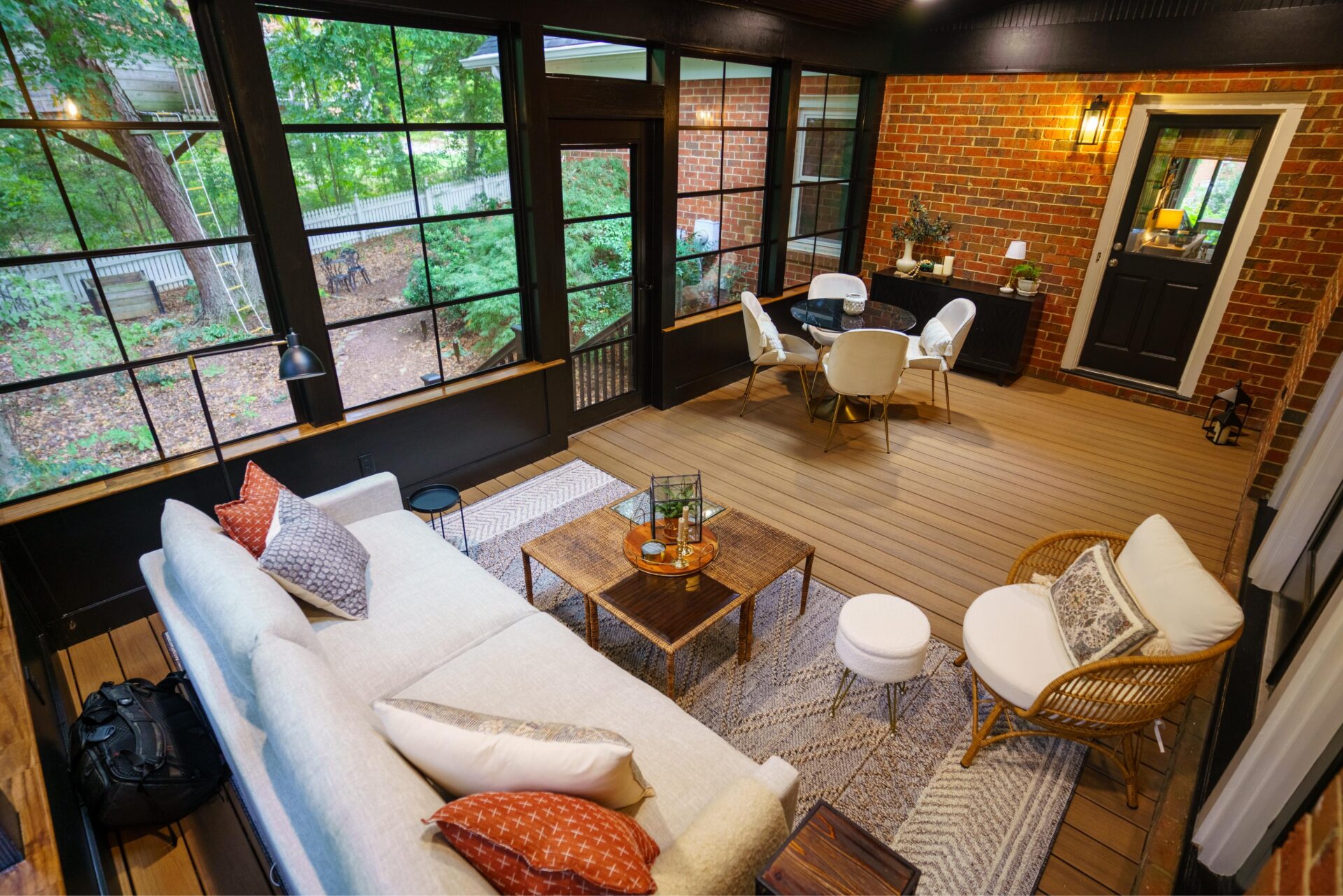
Custom Screeneze screened porch in the Thornhill and Ballantyne neighborhood of South Charlotte, featuring TimberTech Tigerwood composite decking, Trex black aluminum railing, and an outdoor dining set looking out toward a paver patio.

We’d Love to Talk About Your Backyard

Carolina Decks works across the Charlotte metro including Myers Park, SouthPark, Ballantyne, Waxhaw, Lake Norman and everywhere in between. We specialize in custom outdoor living spaces for homeowners who are ready to build it right the first time and actually use it.

If tournament week got you thinking about your backyard, we’d love to be the first call you make. Summer is coming fast so let’s get you ready for it. Book a free estimate or call us at (980) 414-0320 and let’s talk about your future summers.

How to Choose a Pergola Cover in Charlotte, NC: A Design-First Guide to Shade, Style, and Year-Round Comfort

If you’ve spent any time on a Charlotte patio between June and August, you already know: shade isn’t a luxury, it’s the whole point. The right pergola cover transforms a structure you admire from inside the house into an outdoor room you actually live in with elevated style, dry cushions after a 3pm storm, and evenings outside well into October. The wrong one leaks, traps heat, and leaves you back inside by noon.

Choosing well comes down to understanding what Charlotte’s climate actually demands and matching that to how you want to use the space.


What Charlotte’s Climate Is Actually Telling You

Before you fall in love with a specific look, it helps to think through what your cover needs to perform in the Charlotte metro. A few realities worth building around:

Afternoon thunderstorms are a given. Charlotte’s summer storm pattern is reliably inconvenient with clear skies at noon and hard rain by 3pm. A quality pergola cover should drain fast and recover quickly, so your outdoor furniture isn’t sitting in standing water every evening. If your cover can’t handle a standard Charlotte summer afternoon, it’s not the right cover.

Sun exposure is the other half of the equation. A pergola without a cover is a structure. A pergola with the right cover is a retreat. The goal isn’t just blocking light, it’s creating a space that’s genuinely comfortable during the hours you actually want to be outside. Charlotte’s heat index in July and August makes this a real design consideration, not an afterthought.

The shoulder seasons are where a good cover earns its keep. Spring mornings and fall evenings in Charlotte are some of the best outdoor weather in the Southeast and a well-covered pergola lets you take full advantage of them. The right cover extends your usable outdoor time into months that would otherwise be lost to brutal midday sun in summer or raw temperatures in winter.

A luxury covered deck in Mt Isle Harbor featuring a custom roof extension over TimberTech Sea Salt Grey decking and Trex aluminum railings.

The Cover Types Worth Knowing

Louvered Roofs

The most versatile option available, and the one we specify most often for clients who want genuine year-round use. Motorized louvered roofs have become the defining upgrade in high-end Charlotte outdoor living. Adjustable aluminum slats let you control sun, shade, and airflow on demand, and close fully when the storms roll in. Most systems integrate drainage directly through the posts, so water channels cleanly away rather than sheeting off the edge onto your patio.

The adjustability is what separates louvers from every other option. On a hot July afternoon you can close them for full shade. On a cool October evening you can open them completely and sit under the stars. For clients in Ballantyne, Lake Norman, or Myers Park who want a true all-season outdoor room without sacrificing the open-air feel, this is almost always the answer.

One thing to plan for: motorized systems require an electrical run, which is part of the build scope from day one. It’s not an add-on and it should be designed in from the start.

Polycarbonate and Solid Roof Panels

For homeowners who want full rain protection with a cleaner, more architectural look, solid polycarbonate or insulated roof panels are worth serious consideration. They’re permanent, low-maintenance, and when installed with the right pitch, drain quickly after Charlotte’s afternoon storms.

Modern multi-wall polycarbonate systems have also addressed the heat-trap reputation older versions earned. Today’s panels filter UV meaningfully while maintaining better airflow underneath than a standard solid roof. If you’re thinking about a screened porch conversion somewhere down the road, a solid panel system is also a natural first step in that direction. The structure is already there; the enclosure comes later.


HOA Guidelines and Permits: Sort This Out First

This is where a lot of projects get delayed and it’s entirely avoidable with the right preparation. Charlotte-area HOAs, particularly in planned communities like Highland Creek, Berewick, Myers Park, and across the border in Fort Mill and Tega Cay, SC, have specific requirements around pergola structures and covers. Guidelines vary: some boards focus on materials and finish color, others have restrictions on roof pitch, coverage footprint, or street visibility. Knowing what your HOA requires before the design is finalized saves significant time.

Permits are equally important. Depending on the structure’s size, attachment to the home, and cover type, a building permit from Mecklenburg County or the relevant municipality is required. This isn’t optional, and it’s not something to work out after the build is underway.

Carolina Decks pulls all required permits as part of every project. We also provide the documentation and specifications you need to move your project through HOA approval so you have what you need to present to your board with confidence.


What a Covered Pergola Does for Your Investment

Covered pergola additions consistently rank among the highest-return outdoor living investments you can make and in Charlotte’s market, the appetite for well-designed outdoor spaces continues to drive that. Buyers at every price point, and especially in the $500K-and-up range throughout the Charlotte metro, have come to expect outdoor living that functions as a true extension of the home.

More practically: a covered pergola extends your usable outdoor time into months that would otherwise be off the table. The peak heat of a Charlotte July afternoon. The cool but raw days of early March. The crisp evenings in November that an uncovered space simply can’t capture. The right pergola is the difference between a backyard you glance at and one you actually use.

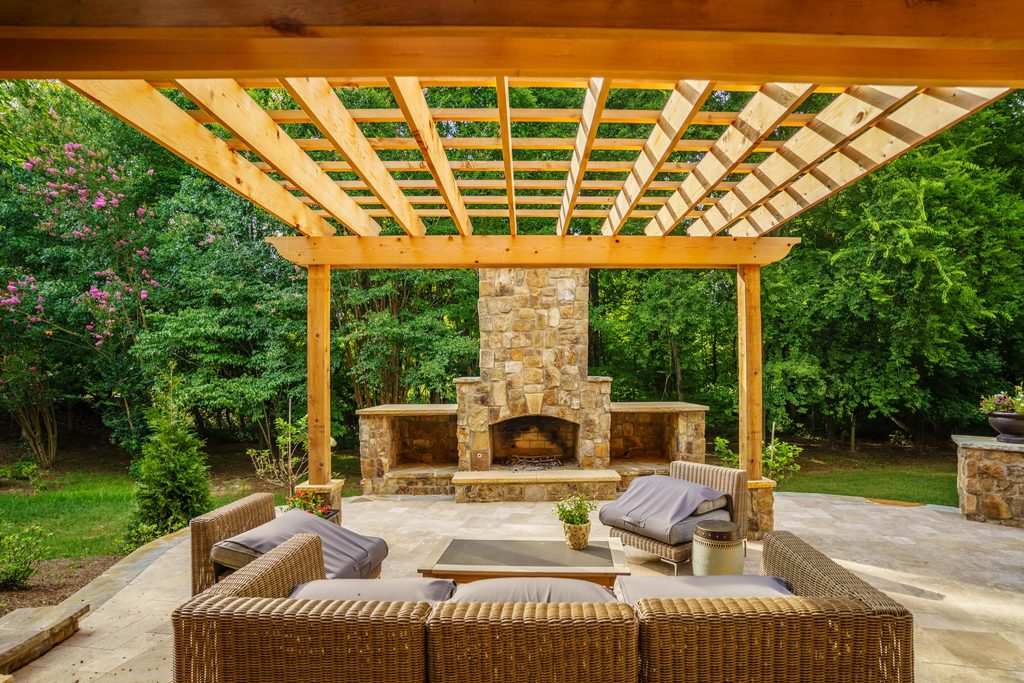
Natural stone patio featuring a custom cedar pergola and comfortable outdoor lounge seating.

Ready to Start the Conversation?

The right cover depends on how you use the space, what your HOA allows, and how your home is designed. These aren’t questions a product brochure can answer.

Carolina Decks builds custom covered pergolas throughout the Charlotte metro, from Ballantyne and Concord to Lake Norman and Fort Mill, and we handle design, permitting, and installation as a single scope. If you’re planning a project for 2026, we’d be glad to walk through the options with you.

Schedule your free design consultation or call us at (980) 414-0320.
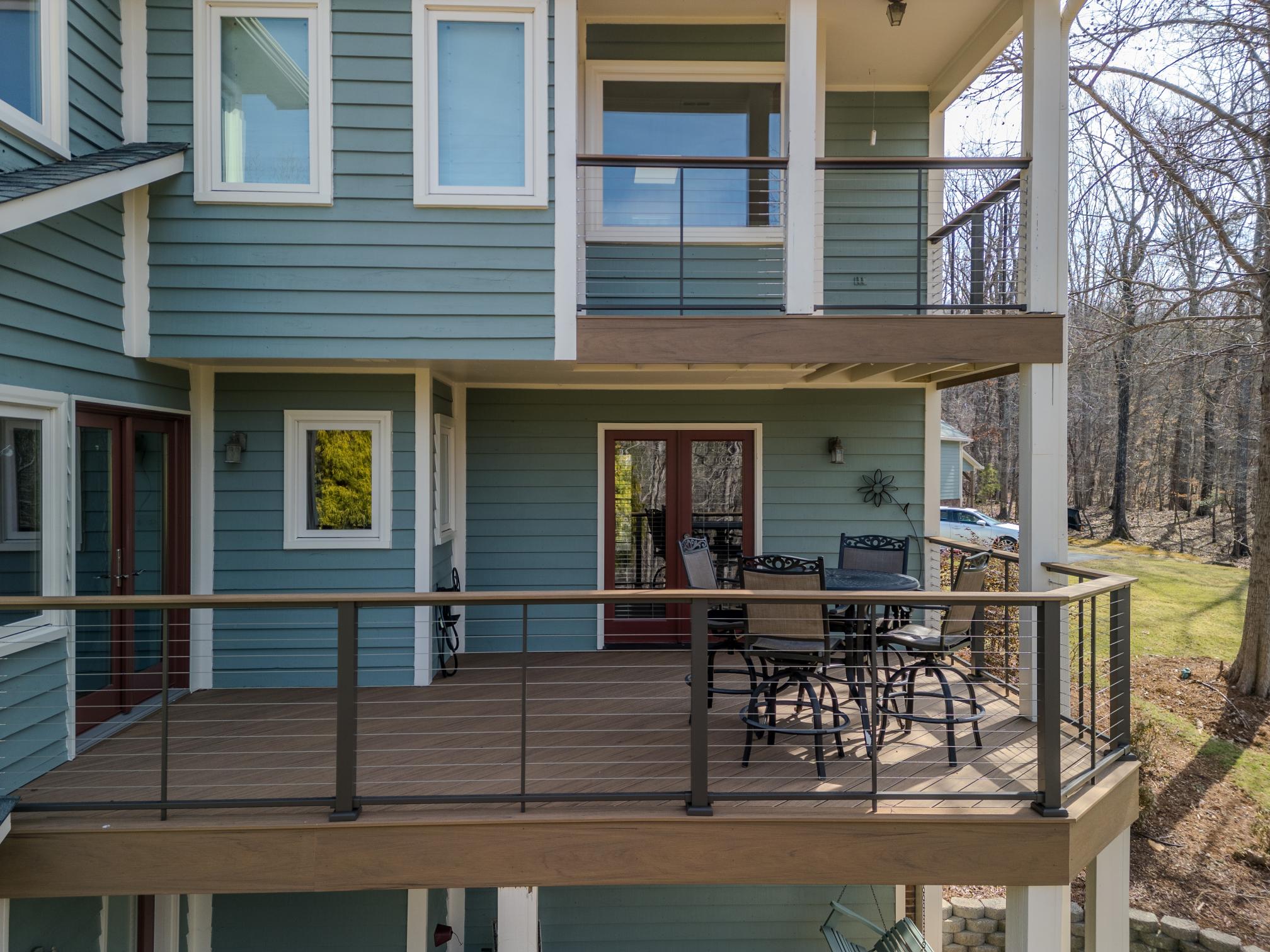

Interested in seeing more? Explore our Pergolas and Shade Structures page to get design inspiration.

Aluminum vs Wood Deck Railings: What Lasts in a Charlotte, NC Backyard

For Charlotte’s climate, aluminum railings outlast wood in almost every scenario. Here’s what that actually means for your project budget and your Saturday mornings.


Why Railing Material Matters More Than Most Homeowners Think

Railings are the most-touched part of any deck. Every time someone steps outside, grabs the rail on the way down the stairs, or leans against the edge while the grill heats up, that’s contact which adds wear and tear. UV exposure, rain, humidity, and daily use add up fast.

Charlotte’s combination of humid summers and occasional winter freezes creates a particularly demanding environment for wood. And here’s what most people don’t realize: the majority of deck failures don’t start at the decking surface. They start at the railing posts where wood meets hardware, where water collects, and where damage quietly builds until it becomes a safety issue.

Overhead view of a multi-level composite deck in Charlotte, NC, featuring white aluminum railings and wide stairs for a low-maintenance backyard solution.

What Wood Railings Offer (and Where They Fall Short)

Wood has a lower upfront cost, typically 20–30% less than aluminum, and there’s a warmth to it that’s hard to argue with. In historic neighborhoods like Dilworth or Myers Park, a traditional wood railing can feel like the right fit aesthetically. And today’s design options have expanded: styles like Chippendale railings let you achieve that classic, refined look even with more maintenance-forward materials.

That said, wood comes with real trade-offs in the Carolinas. The biggest failure points aren’t always what you’d expect. Yes, wood splinters, fades, and grays without regular maintenance. But the more common culprits are the drink rail board on top and the cap of the post as both sit exposed to the elements, collect standing water, and are the first places rot sets in. Without annual sealing or staining, structural integrity erodes faster than most homeowners expect. And once rot takes hold at a post base or along the top rail, you’re not doing maintenance anymore, you’re doing repairs.


Why Aluminum Railings Win on Durability in the Carolinas

Aluminum simply will not rot, warp, splinter, or fade — full stop. A powder-coated aluminum railing holds its color for 10–15 years without refinishing, handles Charlotte’s freeze-thaw cycles without cracking, and asks almost nothing of you beyond an occasional rinse.

For homeowners who already have composite decking planned, or who are building a new deck from scratch, aluminum integrates cleanly with both modern and traditional aesthetics. The style options have come a long way. You’re not choosing between longevity and beauty; you’re getting both.

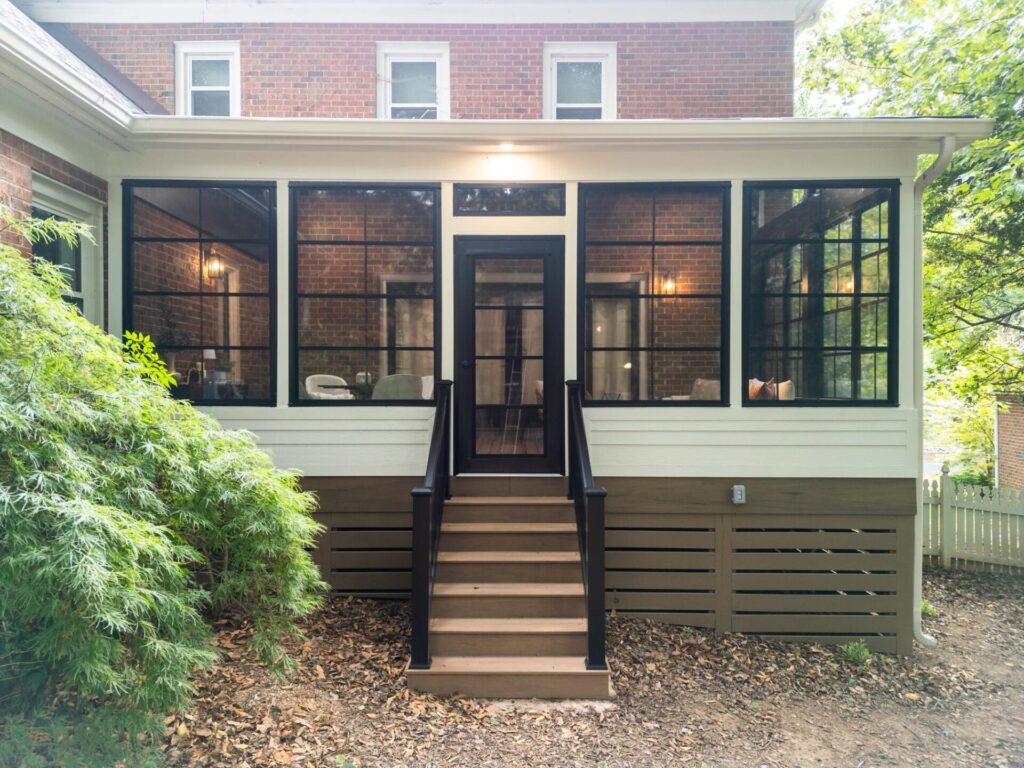
A backyard deck in Charlotte featuring black Trex aluminum railings on a staircase leading to a white screened-in porch.

The Honest Cost Comparison Over 10 Years

Wood looks less expensive compared to aluminum on day one. But run the math honestly over a decade, and the picture shifts.

Wood may have a lower upfront cost, but add in annual maintenance time, refinishing every 3–5 years, and the real possibility of post or top-rail replacement somewhere along the way and those savings quickly disappear. Aluminum means a higher upfront investment but essentially zero ongoing cost.

For most homeowners doing that math honestly, aluminum costs less over a 10-year ownership window. The exception: if you genuinely love the hands-on maintenance ritual and the natural wood look is non-negotiable for your home, that’s a valid choice and we support that too.


Which One Is Right for Your Project?

Choose wood if: a traditional or historic aesthetic is the priority, your upfront budget has firm constraints, or you enjoy hands-on seasonal maintenance.

Choose aluminum if: low maintenance is important to you, you’re pairing it with composite decking, or you want a railing that performs for the long haul without asking much in return.

At Carolina Decks, we’ll give you a straight answer on which one makes more sense for your specific project with no upsell and no pressure.


Not sure which railing is right for your build? We’ll walk you through the options at no cost. Book a free estimate or give us a call. If you want it done before summer, now is the time to get on the schedule.

Built for the Lake: How a Multi-Level Deck Transformed a Sloped Lake Norman Backyard

When you’re on Lake Norman, you’re already somewhere worth being. But for one family on the water, the view from inside the house told a different story than the yard below. An aging deck, a steep grade, and a backyard that had never really connected to the lake. That was the starting point when they called Carolina Decks.

What came next wasn’t a patch job. It was a ground-up design built specifically for the way lake families actually live.

Lower-level covered patio with stone pavers and ceiling fans facing a Lake Norman dock.

The Problem With the Yard and the Opportunity Inside It

The lot dropped sharply from the home’s main floor toward the water, a common reality on Lake Norman’s wooded, natural shoreline. The existing deck had aged out, and the lower portion of the yard was essentially wasted space. There was no real path from the house to the dock, no place to entertain at grade, and no outdoor room that felt finished enough to match the home.

The slope looked like an obstacle. Carolina Decks saw it as a canvas.


Three Levels, Three Distinct Spaces

Interior of a screened porch with vaulted ceilings and heaters overlooking Lake Norman.

The design solution was to work with the grade rather than fight it, creating three connected outdoor spaces that step down from the house toward the water, each with its own purpose.

At the top: a fully screened porch off the main living level, with a vaulted beadboard ceiling, recessed lighting, an infrared heater, and a ceiling fan. It’s an all-season room, comfortable in July heat and October evenings alike. Composite decking and a cable rail system keep sightlines open to the trees beyond.

Below that, an open deck serves as a sun-drenched transition zone, the spot for morning coffee or an afternoon with a view. Then, stepping down to grade: a fully covered lower patio with large-format stone tile, white structural columns, ceiling fans, and a TV mount. Thanks to an under-deck drainage system with a finished ceiling, the space stays completely dry when it rains, making it genuinely usable year-round, not just on clear days. It opens directly toward the lake, framing the dock and the water like a picture window you can walk through.

Rear exterior of a home showing a stone retaining wall and multi-level deck construction.

The stone retaining wall isn’t infrastructure. It’s architecture, the element that ties three distinct levels into one cohesive outdoor living space.


Project Details

  • Location: Lake Norman, Charlotte NC area
  • Scope: Screened porch, open upper deck, covered lower patio, three connected levels
  • Decking: Composite, low-maintenance, engineered for humidity and direct sun exposure
  • Railing: Cable railing system throughout, unobstructed views, clean modern profile
  • Lower Patio: Large-format stone tile with white structural columns and beadboard ceiling
  • Features: Infrared heater, ceiling fans across multiple levels, recessed lighting, TV mounts, under-deck drainage system, stone retaining wall
  • Grade Solution: Multi-level design with integrated staircase and retaining wall. The slope becomes the asset.

If you’re on the lake or anywhere in the Charlotte area with a yard that feels too complicated to build on, that slope might be the best thing about your property. We’d love to show you what’s possible. Call us or get a free estimate.

Spring 2026 Backyard Graduation Party Ideas for Charlotte Families

Charlotte in May and early June is about as close to perfect outdoor weather as you’ll find anywhere. Look forward to warm evenings with the days still long enough to make a backyard gathering feel unhurried. If your family has a graduation this spring, an outdoor party is the obvious move. Here’s how to make it work.


Think in Zones, Not One Big Open Space

The instinct with a larger party is to just push everything to the edges and let people spread out. A better approach is to think in three distinct zones: a food and serving area, seating for guests who want to settle in, and open space for mingling and movement.

A well-designed deck or patio handles the first two naturally. It gives you a defined, level surface for your serving table and a place to anchor comfortable seating for older guests who don’t want to stand for two hours. The open yard becomes the flow zone: keep it clear, and the party moves the way you want it to.

If you have a screened porch, use it. It becomes the quiet room, cooler, bug-free, and a natural gathering spot for guests who want a real conversation without competing with the crowd. A screened outdoor living space earns its keep on a day like this.


The One Thing Most Charlotte Hosts Forget: Shade and a Rain Backup

This is the one that catches people off guard every year. Charlotte’s May afternoons can reach the mid-80s, and late-day pop-up storms are a real feature of spring in the Carolinas, not a rare exception.

Shade matters more than most hosts plan for. A covered structure (a pergola, a porch roof, even a well-positioned sail shade) keeps the food table out of direct sun and gives older guests a place to sit comfortably without retreating inside.

For rain, have a plan before the day arrives. A covered outdoor space means the party continues regardless of what rolls through. If you don’t have a permanent covered structure, rent a 20×20 canopy tent and set it up the day before, not the morning of, so you’re not scrambling while guests are arriving. Position it to preserve the natural flow between your deck and the yard rather than blocking it.


Making Your Deck Work for a Crowd

A deck that comfortably seats eight can accommodate twenty or more people when it’s set up right. Clear the furniture you don’t need. A custom deck with open railing and clean sightlines feels expansive with people on it; one that’s crowded with patio sets feels cluttered.

A few details that make a real difference:

  • String lights run along a pergola or railing immediately shift the atmosphere as the evening moves in. It’s the single highest-return detail for an outdoor party.
  • An outdoor rug anchors the seating area and signals intention. A rug makes the space feels designed rather than assembled.
  • Flow from the kitchen matters more than most hosts realize until they’re on their fourth trip across the yard carrying a tray. The fewer steps between food prep and the serving table, the better your experience as a host.

This Might Be the Year

If you’re deep in graduation party planning right now, there’s a good chance you’ve already had the thought: This backyard could be so much more than this.

Maybe it’s watching guests bunch up on a small concrete slab. Maybe it’s realizing a covered pergola would have solved the whole rain problem before it started. Or maybe it’s just standing outside after everyone leaves and thinking next year is my year.

Spring projects booked in April can often be finished before summer. Custom deck builds and screened porch additions take planning, and the best build windows in the Charlotte metro fill up faster than most homeowners expect. You don’t have to watch another season go by from the same backyard.

If you’re thinking about making next year’s party, and next summer’s weekends, look completely different, we’d love to talk. A free estimate takes about 30 minutes, and we’ll give you an honest picture of what’s possible and what it costs.

Book your free estimate here or give us a call at (980) 414-0320. We work with families across Charlotte, Lake Norman, Matthews, and the surrounding communities.

The Ledger Board: The Most Important Detail on Your Charlotte Deck

The deck ledger board is where your deck connects to your house and it’s the most common source of deck structural failures nationwide. It’s also the one detail most homeowners never think about until something goes wrong. Here’s what proper ledger board attachment looks like, and the three red flags that mean yours might have a problem.

What the ledger board actually is

The ledger is a horizontal board that, in most cases, is bolted directly to the rim joist or band joist of your home’s floor framing. It’s one of the primary load bearing structural components of your entire deck as half of everything that deck holds runs through this single connection point.

Incorrectly attached ledgers are responsible for the majority of deck collapses, and the failure is almost always sudden, usually under load (like in the middle of dancing a party). The other challenge: once your decking surface is down, you can’t see the ledger board. Which is exactly why structural integrity at this connection point is worth understanding before the build begins.

What correct ledger board attachment looks like

  • Proper fasteners: Structural screws, lag screws, or lag bolts in a staggered pattern: not nails, not standard deck screws. The fastener choice alone is one of the clearest indicators of build quality.
  • Flashing: Correctly installed Z-flashing, flashing tape, or a proprietary ledger flashing system that directs water away from the house connection. Water damage behind the ledger is one of the leading causes of long-term structural issues, and in Charlotte’s unpredictable rain, this detail protects your investment for the long term.
  • Connection into framing: Fasteners must hit the actual floor framing, not sheathing or siding. An experienced contractor will know to locate the rim joist before installing the ledger board.
  • Code compliance: All county building inspectors will check for correct ledger board attachment and flashing details on every permitted deck. Working within local building codes isn’t just a formality, it’s what ensures the structural soundness of the finished build. Any property owner with a permitted deck will have this detail on record with the building department.
A diagnostic chart for homeowners showing critical safety red flags at the deck ledger connection, including visible rot, nails instead of bolts, and missing flashing.

Three red flags on an existing ledger

  • Visible rot at the connection point. Dark staining, soft wood, or gaps where the deck ledger meets the house are signs that water damage has already set in. This kind of deterioration affects the surrounding structural components quickly.
  • Nails instead of bolts. You can tell by the fastener head pattern. Nails are smooth while lag screws and lag bolts have hex heads. If you see a nail pattern on an older Charlotte deck, that’s worth a closer look.
  • No flashing, or flashing installed incorrectly. If water can get behind the deck ledger, rot follows. This is one of the most common structural issues we see on decks built before current local code requirements.
  • Any lateral movement near the house. Push gently on the deck frame close to where it attaches to the house. It should feel completely solid. Any flex is a sign that the structural integrity of that connection deserves attention.

What to do if you’re concerned

If your deck was permitted and built in the last ten years by a licensed contractor, you’re almost certainly in good shape as local code requires a structural inspection, and an experienced builder knows this detail matters.

If your deck is older, was built without a permit, or is a DIY build, it’s worth having someone take a look. Sometimes it’s a straightforward remedy. A fastener upgrade or flashing correction can restore structural soundness without a full rebuild. A NADRA-certified deck design and inspection professional can give you a thorough evaluation, document what they find, and walk you through your options.

But here’s the truth most homeowners don’t always want to hear: an older deck with a compromised ledger isn’t always a candidate for a targeted repair. By the time the structural issues are visible, the substructure, joists, and fasteners have typically aged right alongside it. At that point, the smarter conversation is often about what a thoughtfully designed new deck would look like and what it would cost. A licensed inspector or home inspector with deck experience can tell you honestly which situation you’re in.


Have a professional come evaluate your deck and give you an informed answer. It may be that some targeted repairs can correct the issue or it may be time for a new build. Either way, you’ll know exactly which direction makes sense for your home.

And if it’s time for a replacement, we’ll walk you through every step. We serve Charlotte, Ballantyne, Steele Creek, Huntersville, Waxhaw, and surrounding communities.Get an estimate for a new build or call us at (980) 414-0320.
Hidden Fasteners vs Face Screws: What the Best Charlotte Decks Have in Common

Face Screws or Hidden Fasteners: Here’s the Difference

Every deck board has to be anchored to the joists beneath it, that’s what keeps the surface stable, safe, and structurally sound underfoot. The question is how, and the answer shapes everything from how the finished surface looks to how the decking material performs over the long term.

  • Face screws go straight through the top of the board and into the joist below, leaving a grid of screw heads visible across the finished surface. It’s structurally sound, but you’re essentially looking at the fastening system every time you step outside.
  • Hidden fasteners work differently. They clip into a grooved edge along each board and are installed from the side, with no hardware visible on the surface. The deck looks the way it was designed to look: clean, uninterrupted, and visually appealing from edge to edge.

Both methods hold the boards securely. The difference is entirely about beauty, longevity, and surface integrity.


The Case for Hidden Fasteners

There’s a reason hidden fasteners have become the standard on quality custom builds and it goes well beyond a great design.

  • A deck surface worth showing off. With no visible hardware, the natural character of your decking material takes center stage. Whether you’re working with composite deck boards, PVC decking, or tropical hardwoods, hidden fasteners let the product speak for itself. That matters when you’ve invested in premium materials.

  • Moisture protection that pays off over 30 years. Every screw hole is a potential entry point for water. In Charlotte, where spring and summer bring consistent rainfall, that’s an important concern. Hidden fasteners eliminate those penetration points entirely, protecting the board from the inside out and when paired with quality corrosion-resistant fasteners, you’ve built something genuinely engineered to last.

  • Warranty compliance. This one surprises a lot of homeowners. Composite decking manufacturers, including industry leaders like TimberTech and Trex, typically recommend or even require hidden fasteners as part of their product specifications in order to maintain full warranty coverage. If your contractor is installing composite deck boards with face screws as the default, the warranty on that material may be void before the first season is over. 

    As a TimberTech Platinum contractor, their highest certification tier, Carolina Decks is trained on their full product line and know exactly which fastener systems keep that warranty intact. We install CAMO hidden fastener systems as our standard: a purpose-built clip engineered specifically for grooved composite and hardwood boards. For us, fasteners are not an afterthought, they’re essential to a system designed to work with the decking, not just against the joist.

  • Room to breathe. Hidden fasteners allow decking boards to expand and contract naturally. And in Charlotte, where summers are long and humid and temperatures swing dramatically between seasons, that movement is real. Screw holes create stress concentration points that lead to cracking and splitting over time. Eliminate the holes, and you extend the life and wear resistance of the surface considerably.

  • Curb appeal that you actually live in. Homes with hidden fastener decks consistently photograph better, show better, and signal quality to anyone who knows what they’re looking at. Which is great if you ever sell, but honestly, it matters more on a Saturday afternoon when you’re out there living in it.

When Face Screws Are the Right Call

We believe in being straight with you, and the truth is, face screws aren’t always the wrong answer.

Repairs and board replacement on existing decks. Hidden fastener systems make it significantly harder to remove and replace individual boards. If you’re patching into an older deck rather than doing a full custom build, face screws give you flexibility.
Pressure treated lumber with a painted or stained finish.When treated wood is getting a solid surface finish anyway, the hardware disappears under the coating. In those situations, hidden fasteners can add cost without a visible return.
Complex geometries.Tight radius cuts, unusual angles, or intricate patterns can be more practical to execute with face screws. A skilled contractor will tell you when the design calls for it.
Budget-first builds. Hidden fasteners typically add $1–3 per square foot in material and labor. For homeowners prioritizing a long-term investment, that’s an easy decision. Face screws remain a practical choice for simpler builds and are the more budget-friendly option for projects where finish takes a back seat to function.
The key is that the choice should always be intentional, made based on your specific project, your materials, and your goals, not just defaulted to because it’s faster.

The key is that the choice should always be intentional, made based on your specific project, your materials, and your goals, not just defaulted to because it’s faster.


What to Ask Your Contractor

Before you sign anything, these questions will tell you a lot about who you’re working with.

  1. “What fastener system do you use as your standard?” A quality contractor has a preference and a reason for it. Vague answers here are a yellow flag.
  1. “Does the decking manufacturer recommend hidden fasteners for this product?” If the answer is yes and the contractor is proposing face screws anyway, ask why. A quality contractor should have a clear, legitimate reason.
  1. “Will my warranty be affected by the fastener choice?” This is a real and important question for any composite or PVC decking product. 
  1. “What fastener system are you using and is it engineered for this specific decking product?” Not all hidden fasteners are created equal. We use CAMO clip systems precisely because they’re designed to work with grooved composite and hardwood boards, not generic hardware that happens to be out of sight.

If a contractor is proposing composite decking with face screws as the default and can’t give you a clear reason why, push back. It’s almost always the wrong call for a long-term investment.


Hidden fasteners are one of those details that separates a deck that looks great in year one from one that still looks great in year ten. At Carolina Decks, we’d love to walk you through the materials and methods we use on every build and show you the difference in person.

Ready to talk through your project? We start with a conversation: no obligation, no site visit until you’re ready. Schedule a call with our team and we’ll walk you through materials, design options, and what a Carolina Decks build actually looks like from start to finish.