
Hidden Fasteners vs Face Screws: What the Best Charlotte Decks Have in Common
Face Screws or Hidden Fasteners: Here’s the Difference
Every deck board has to be anchored to the joists beneath it, that’s what keeps the surface stable, safe, and structurally sound underfoot. The question is how, and the answer shapes everything from how the finished surface looks to how the decking material performs over the long term.
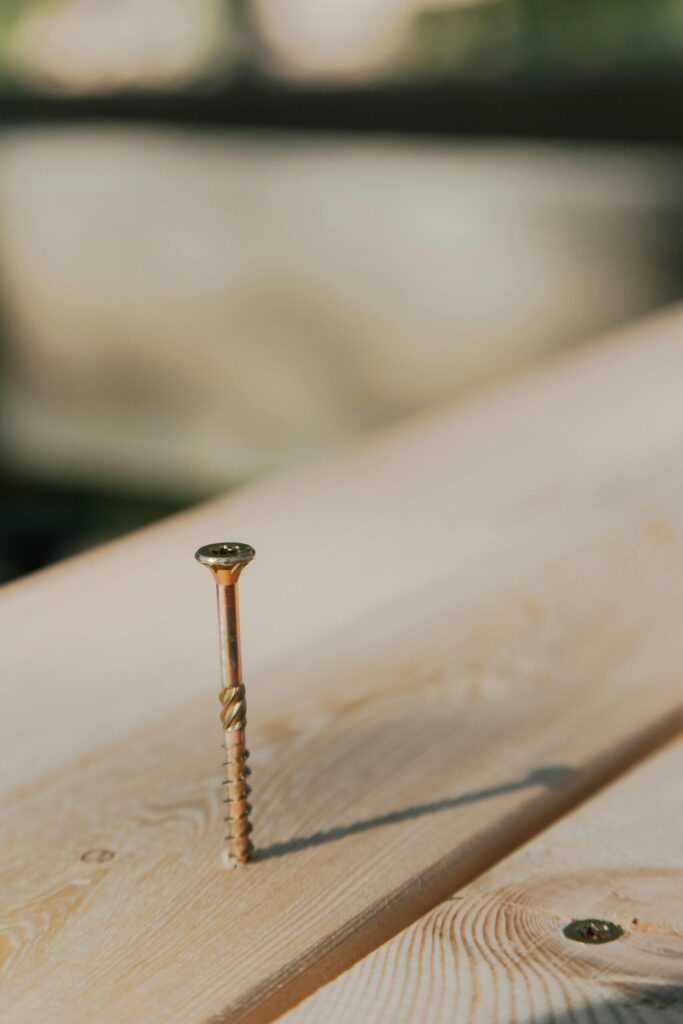
- Face screws go straight through the top of the board and into the joist below, leaving a grid of screw heads visible across the finished surface. It’s structurally sound, but you’re essentially looking at the fastening system every time you step outside.
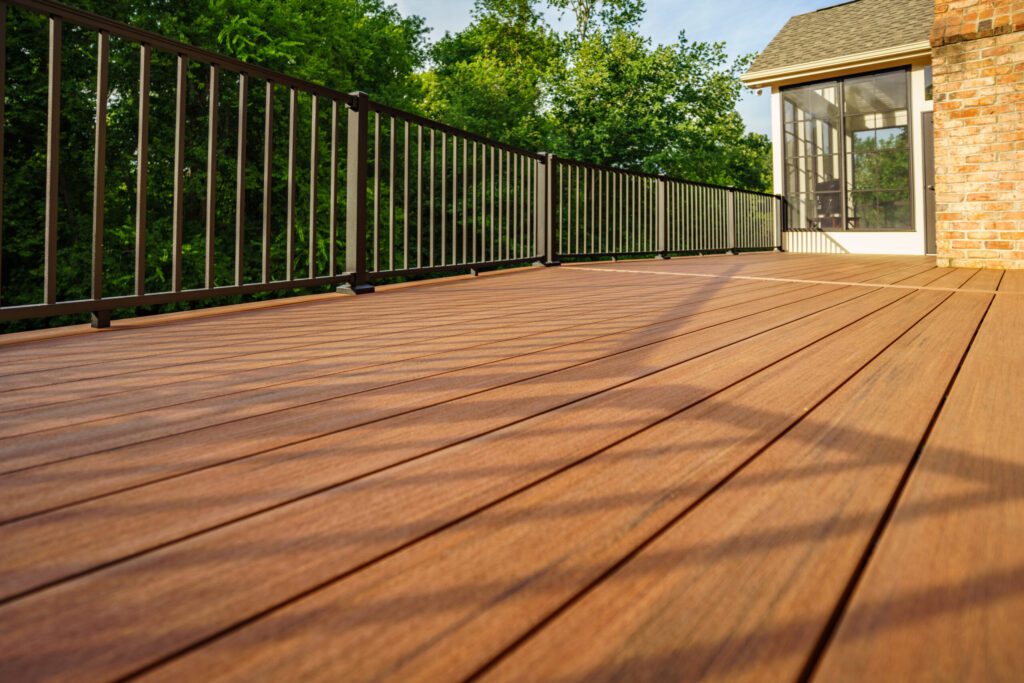
- Hidden fasteners work differently. They clip into a grooved edge along each board and are installed from the side, with no hardware visible on the surface. The deck looks the way it was designed to look: clean, uninterrupted, and visually appealing from edge to edge.
Both methods hold the boards securely. The difference is entirely about beauty, longevity, and surface integrity.
The Case for Hidden Fasteners
There’s a reason hidden fasteners have become the standard on quality custom builds and it goes well beyond a great design.
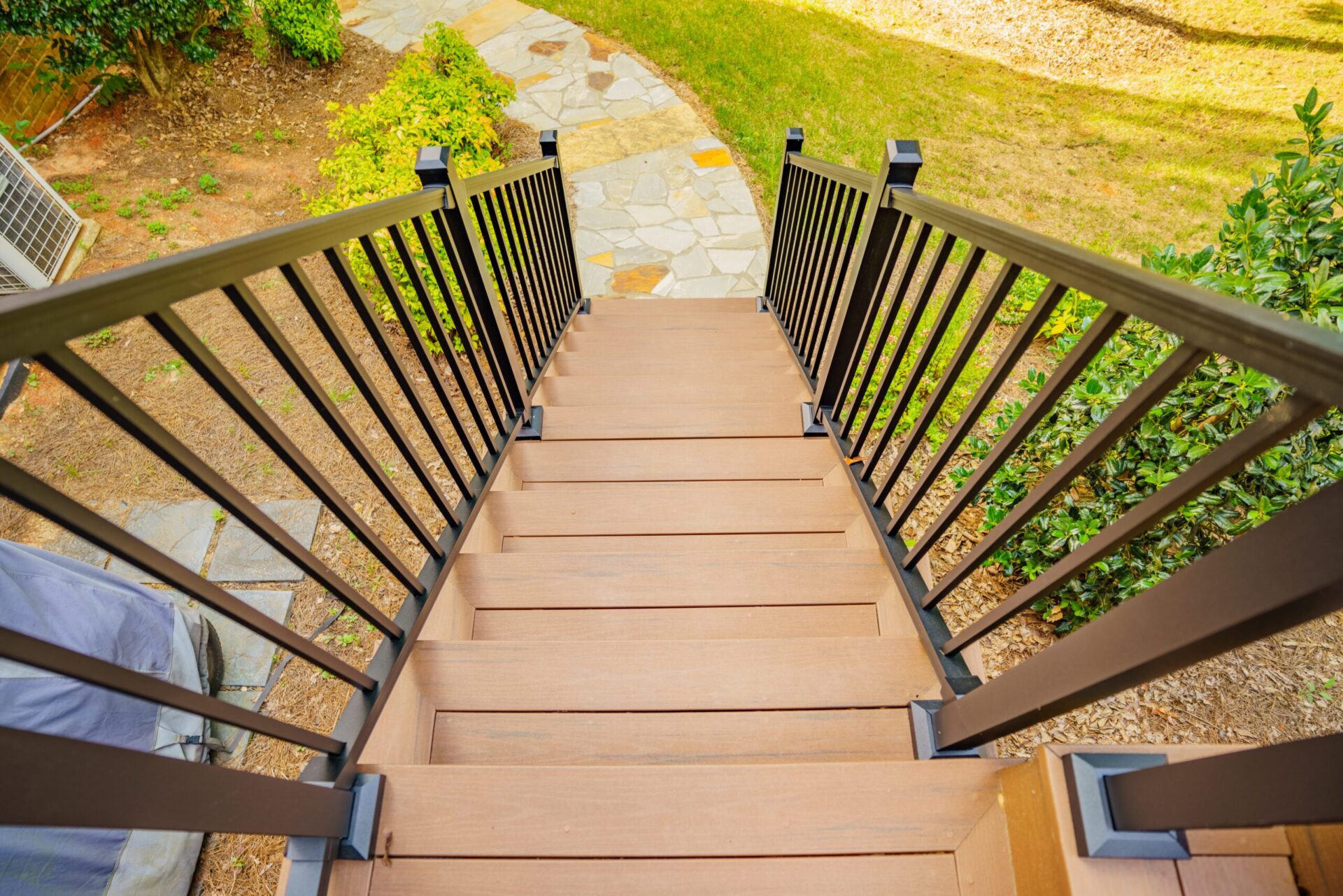
- A deck surface worth showing off. With no visible hardware, the natural character of your decking material takes center stage. Whether you’re working with composite deck boards, PVC decking, or tropical hardwoods, hidden fasteners let the product speak for itself. That matters when you’ve invested in premium materials.
- Moisture protection that pays off over 30 years. Every screw hole is a potential entry point for water. In Charlotte, where spring and summer bring consistent rainfall, that’s an important concern. Hidden fasteners eliminate those penetration points entirely, protecting the board from the inside out and when paired with quality corrosion-resistant fasteners, you’ve built something genuinely engineered to last.
- Warranty compliance. This one surprises a lot of homeowners. Composite decking manufacturers, including industry leaders like TimberTech and Trex, typically recommend or even require hidden fasteners as part of their product specifications in order to maintain full warranty coverage. If your contractor is installing composite deck boards with face screws as the default, the warranty on that material may be void before the first season is over.
As a TimberTech Platinum contractor, their highest certification tier, Carolina Decks is trained on their full product line and know exactly which fastener systems keep that warranty intact. We install CAMO hidden fastener systems as our standard: a purpose-built clip engineered specifically for grooved composite and hardwood boards. For us, fasteners are not an afterthought, they’re essential to a system designed to work with the decking, not just against the joist.
- Room to breathe. Hidden fasteners allow decking boards to expand and contract naturally. And in Charlotte, where summers are long and humid and temperatures swing dramatically between seasons, that movement is real. Screw holes create stress concentration points that lead to cracking and splitting over time. Eliminate the holes, and you extend the life and wear resistance of the surface considerably.
- Curb appeal that you actually live in. Homes with hidden fastener decks consistently photograph better, show better, and signal quality to anyone who knows what they’re looking at. Which is great if you ever sell, but honestly, it matters more on a Saturday afternoon when you’re out there living in it.
When Face Screws Are the Right Call
We believe in being straight with you, and the truth is, face screws aren’t always the wrong answer.
| Repairs and board replacement on existing decks. | Hidden fastener systems make it significantly harder to remove and replace individual boards. If you’re patching into an older deck rather than doing a full custom build, face screws give you flexibility. |
| Pressure treated lumber with a painted or stained finish. | When treated wood is getting a solid surface finish anyway, the hardware disappears under the coating. In those situations, hidden fasteners can add cost without a visible return. |
| Complex geometries. | Tight radius cuts, unusual angles, or intricate patterns can be more practical to execute with face screws. A skilled contractor will tell you when the design calls for it. |
| Budget-first builds. | Hidden fasteners typically add $1–3 per square foot in material and labor. For homeowners prioritizing a long-term investment, that’s an easy decision. Face screws remain a practical choice for simpler builds and are the more budget-friendly option for projects where finish takes a back seat to function. The key is that the choice should always be intentional, made based on your specific project, your materials, and your goals, not just defaulted to because it’s faster. |
The key is that the choice should always be intentional, made based on your specific project, your materials, and your goals, not just defaulted to because it’s faster.
What to Ask Your Contractor
Before you sign anything, these questions will tell you a lot about who you’re working with.
- “What fastener system do you use as your standard?” A quality contractor has a preference and a reason for it. Vague answers here are a yellow flag.
- “Does the decking manufacturer recommend hidden fasteners for this product?” If the answer is yes and the contractor is proposing face screws anyway, ask why. A quality contractor should have a clear, legitimate reason.
- “Will my warranty be affected by the fastener choice?” This is a real and important question for any composite or PVC decking product.
- “What fastener system are you using and is it engineered for this specific decking product?” Not all hidden fasteners are created equal. We use CAMO clip systems precisely because they’re designed to work with grooved composite and hardwood boards, not generic hardware that happens to be out of sight.
If a contractor is proposing composite decking with face screws as the default and can’t give you a clear reason why, push back. It’s almost always the wrong call for a long-term investment.
Hidden fasteners are one of those details that separates a deck that looks great in year one from one that still looks great in year ten. At Carolina Decks, we’d love to walk you through the materials and methods we use on every build and show you the difference in person.
Ready to talk through your project? We start with a conversation: no obligation, no site visit until you’re ready. Schedule a call with our team and we’ll walk you through materials, design options, and what a Carolina Decks build actually looks like from start to finish.
Looking for inspiration? Check out our Project Gallery or read our previous blog post.