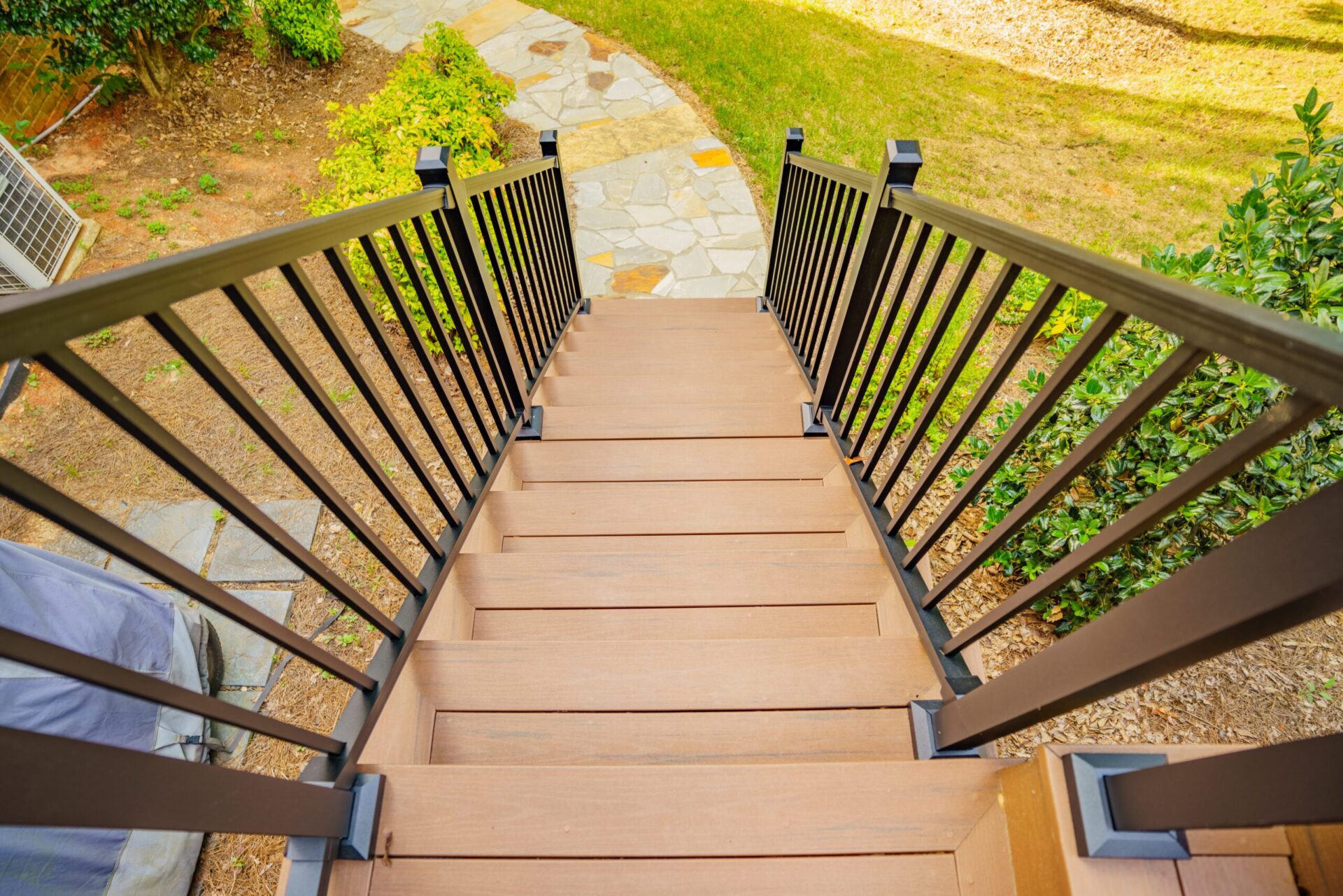

What’s Actually Holding Up Your Composite Deck? Learn About Your Deck Structure

When most homeowners picture a new deck, they’re imagining the finished product: the premium composite boards, sleek cable railings, and string lights at dusk. And honestly, that’s the fun part.

But what separates a deck that looks great for 20 years from one that starts sagging or rotting in five has almost nothing to do with the surface. It’s everything underneath it.

As a premier composite deck builder in Charlotte, we know that a luxury outdoor space is only as good as its framing. Here is a look at what actually goes into a well-built, code-compliant deck from the ground up.

It Starts in the Ground: Deck Footings and Piers

Every deck begins with how to connect the boards to the ground. In most Charlotte-area builds, that means concrete footings poured below the frost line, deep enough that seasonal ground movement doesn’t shift your structure over time.

But soil conditions in the Carolinas aren’t always cooperative. In areas with poor or unstable soil, we use helical piers instead. These are steel shafts mechanically driven deep into stable ground. While they are more involved than a standard concrete footing, they are the right call when the ground demands it. A deck is only as solid as its foundation, and this is one place where cutting corners shows up fast.

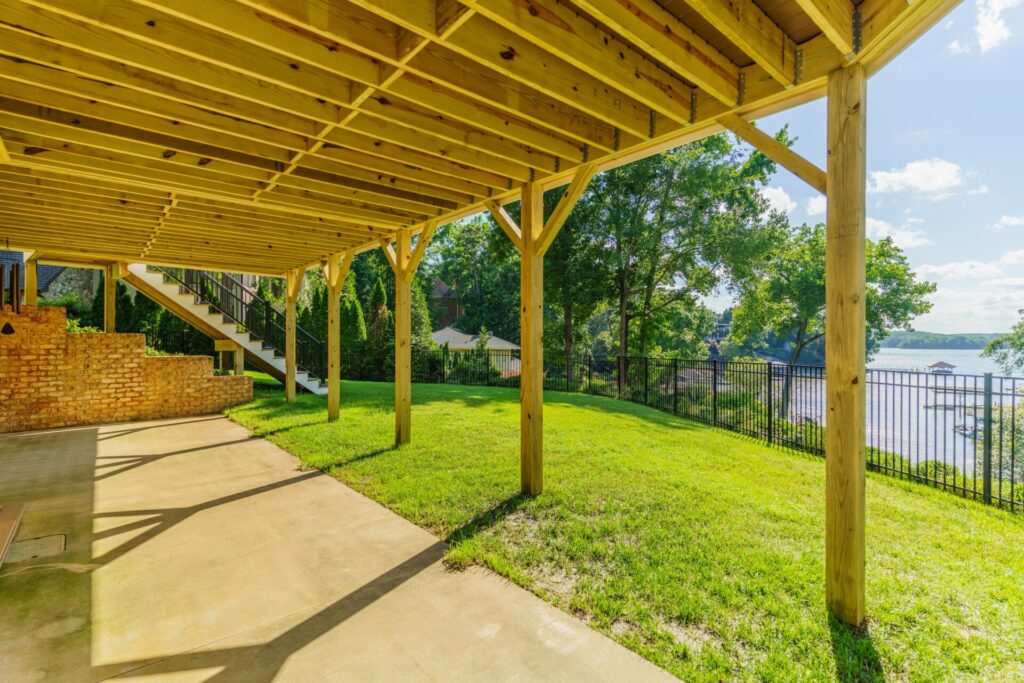
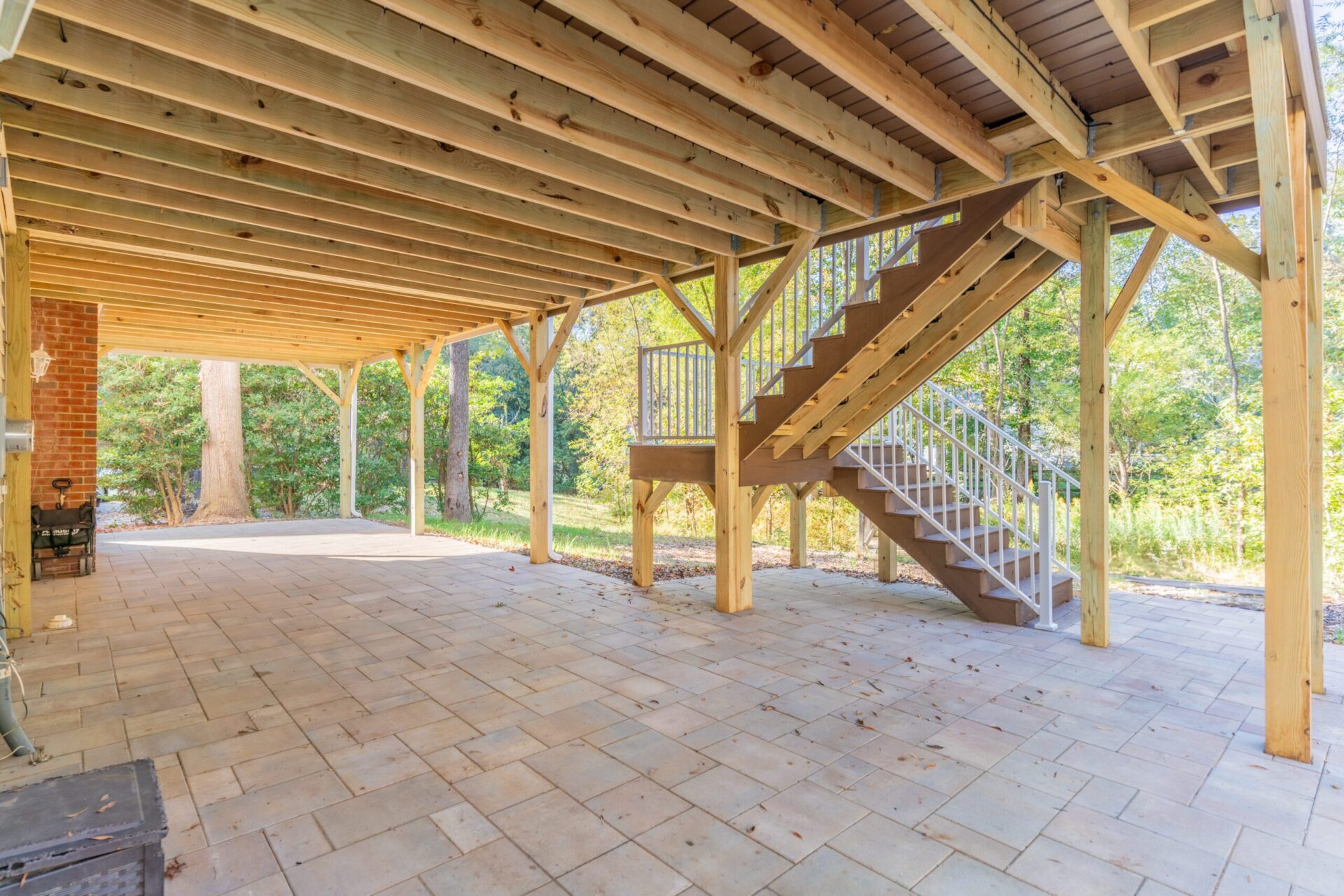
Posts, Beams, and Joists: The Structural Deck Framing

Once the footings are set, the structural framing goes up. Think of this as the skeleton of your build:

  • Posts: Transfer the weight and load from the deck down to the footings.
  • Beams: Span between the posts and carry the heavy lifting of the joists.
  • Joists: Run perpendicular to your decking boards; this is what your composite or wood boards actually fasten to.

The spacing, sizing, and lumber grade at every one of these levels is strictly governed by local North Carolina building codes and for good reason.

Local Code & Permits: We handle all deck permits across Mecklenburg, York, and Cabarrus counties. Every framing decision we make is engineered to pass inspection and built to last well beyond it.

The Ledger Board: Where the Deck Meets the House

For attached decks, the ledger board is one of the most critical structural connections in the entire build. It is the framing member that fastens your deck structure directly to your home’s rim joist.

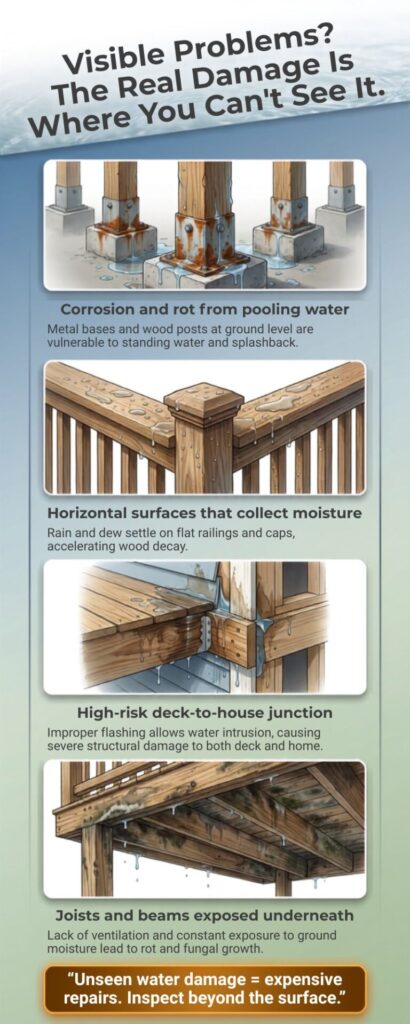
Unsurprisingly, it is also one of the most common places moisture damage and wood rot originate when it’s not detailed correctly. To protect your home, the following steps are non-negotiable:

  • Proper Flashing: Creating a waterproof barrier to divert rain.
  • Approved Fasteners: Using structural screws rather than standard nails.
  • Clean Connection: Ensuring a tight, seamless fit to prevent water from pooling.

Choosing a Decking Surface: Composite vs. Traditional Wood

This is where your material choice becomes visible. Whether you’re going with a premium composite brand like Trex or TimberTech, or a traditional painted porch floor, the surface boards are what you’ll live on.

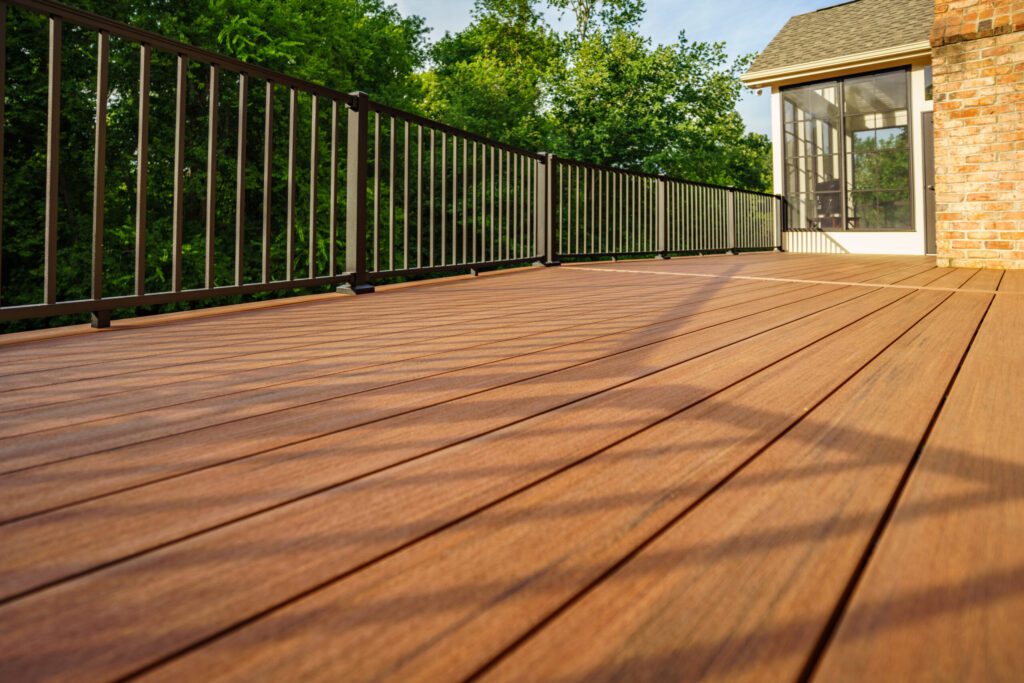
In Charlotte’s humid climate, the installation details matter immensely. We utilize hidden fastener systems wherever possible. This results in:

  1. Cleaner sightlines with no exposed screw heads.
  2. No fastener holes for water to pool in, preventing long-term moisture degradation.
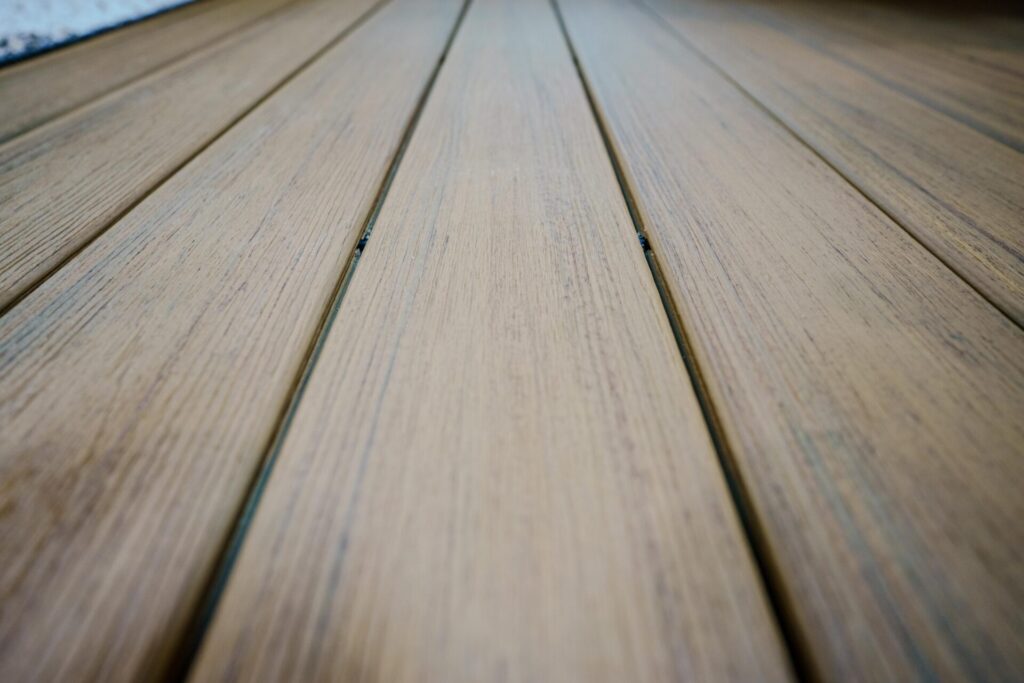
Close-up macro view of premium brown composite decking boards installed with a hidden fastener system, showing clean sightlines and zero exposed screws.

Railings: Merging Structural Safety with Design

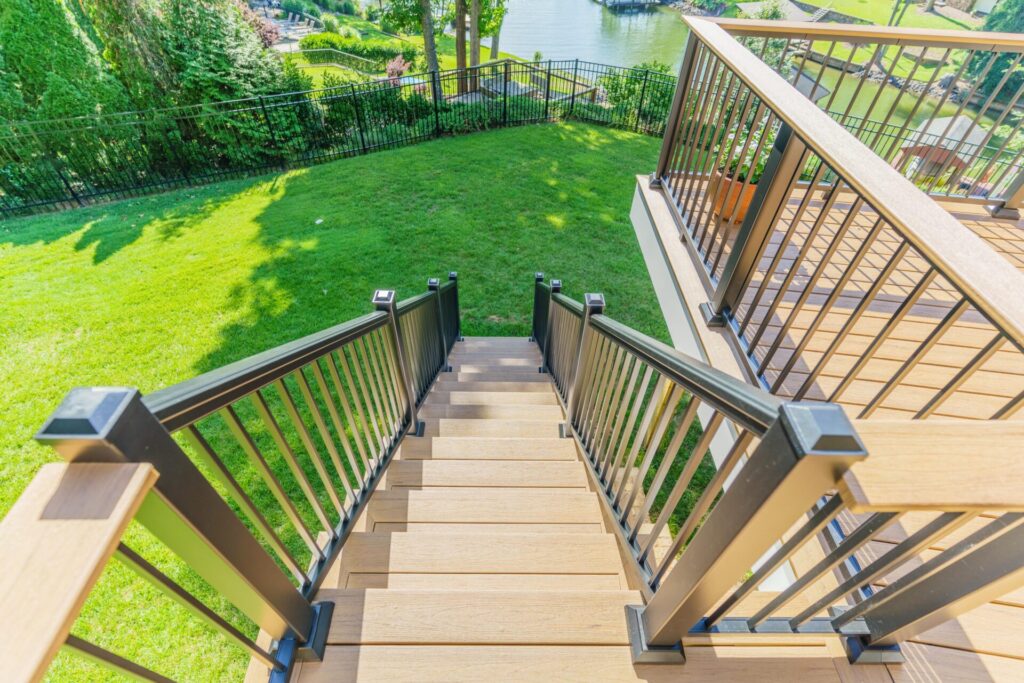
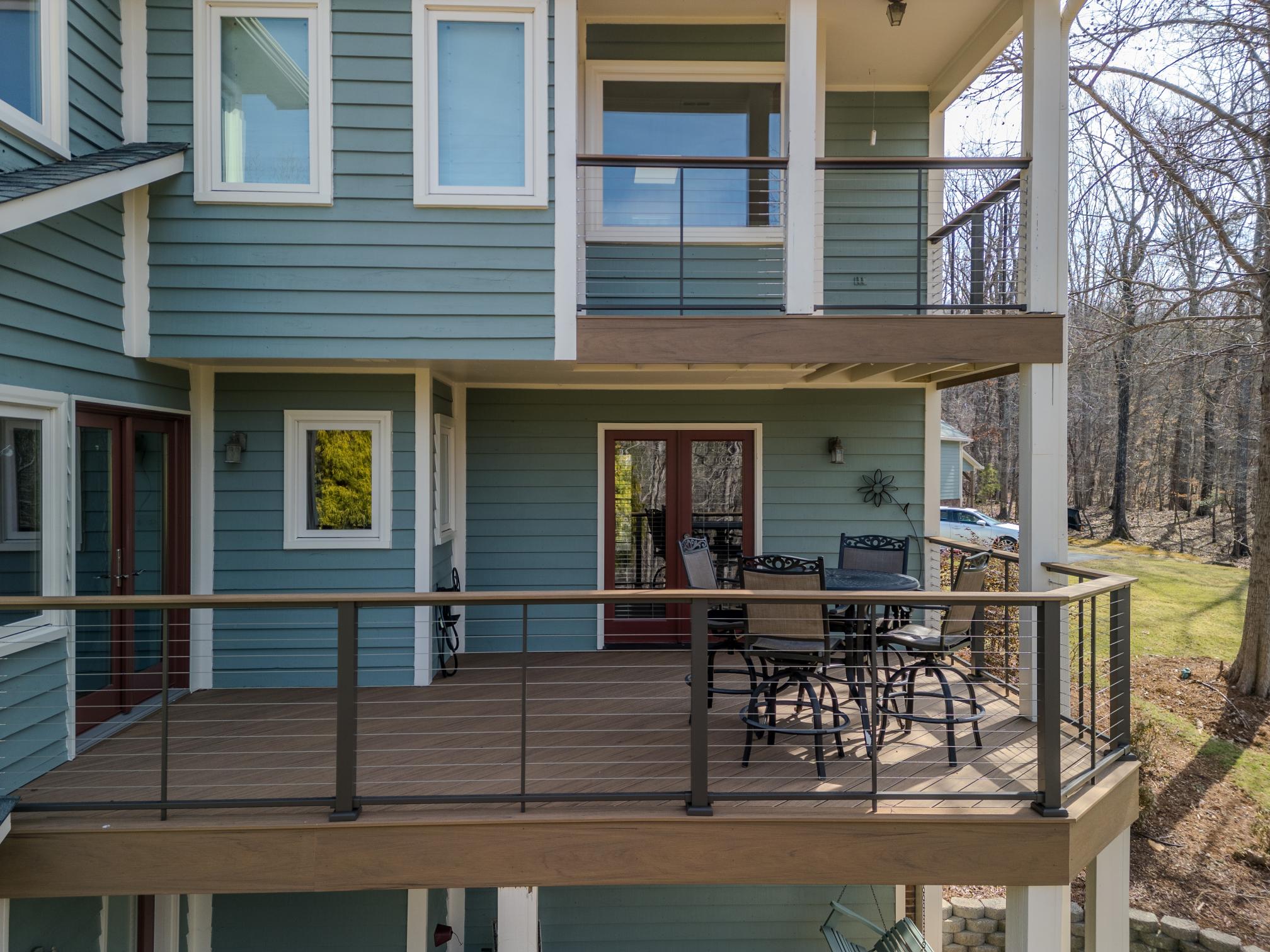
Deck railings do a major job structurally: they are required by building codes at certain heights and must meet strict load requirements. However, they are also the most design-forward element of your outdoor living space.

Railing TypeBest ForLongevity Benefit
Aluminum RailingModern/Classic LooksNo rot, no warping, 10–15 year maintenance-free cycle.
Cable Railing SystemsUnobstructed ViewsHigh durability, minimal visual profile.
Glass PanelsLuxury/WindbreaksMaximum visibility for pools or beautiful backyards.

Why This Matters for Your Charlotte Home Investment

A well-designed outdoor space in the Charlotte metro, whether you’re in Ballantyne, Lake Norman, Waxhaw, or Myers Park, yields a genuine return on investment. But that return entirely depends on the structural integrity of the build.

The surface is what your guests notice. The structure is what protects your money. When both are done right, you get a beautiful space that performs for decades without the slow-burn cost of deferred maintenance.

Ready to Build Right?

If you’re thinking about a new deck this season, we’d love to walk you through what a quality build looks like for your specific property. Book a free estimate with Carolina Decks today, and let’s start building from the ground up.

More questions? Take a deeper look at how Carolina Decks builds custom decks or read our previous blog post.

What Does a Deck Actually Cost in Charlotte? (And Why the Honest Answer Is: It Depends)


Often the first question on the mind for anyone looking to improve their outdoor space is quite simple: How much does it cost to build a deck in Charlotte, NC? But the answers a simple online search gives are all over the place. Is the right number $8,000, $25,000, $60,000? And, unfortunately for you, none of those estimates are technically wrong, which is exactly why the question is so hard to answer without context.

What we can tell you is what actually drives deck pricing, what corners cut today cost you more in Charlotte’s climate, and what you should expect at every level of investment. As trusted Charlotte deck builders, we craft every estimate with your criteria in mind and want you to be informed about what to budget for your dream project.

Understanding the Average Cost to Build a Deck (And the Deck Cost Per Square Foot)

Every deck quote looks different because every deck is different. Four factors move the number more than anything else.

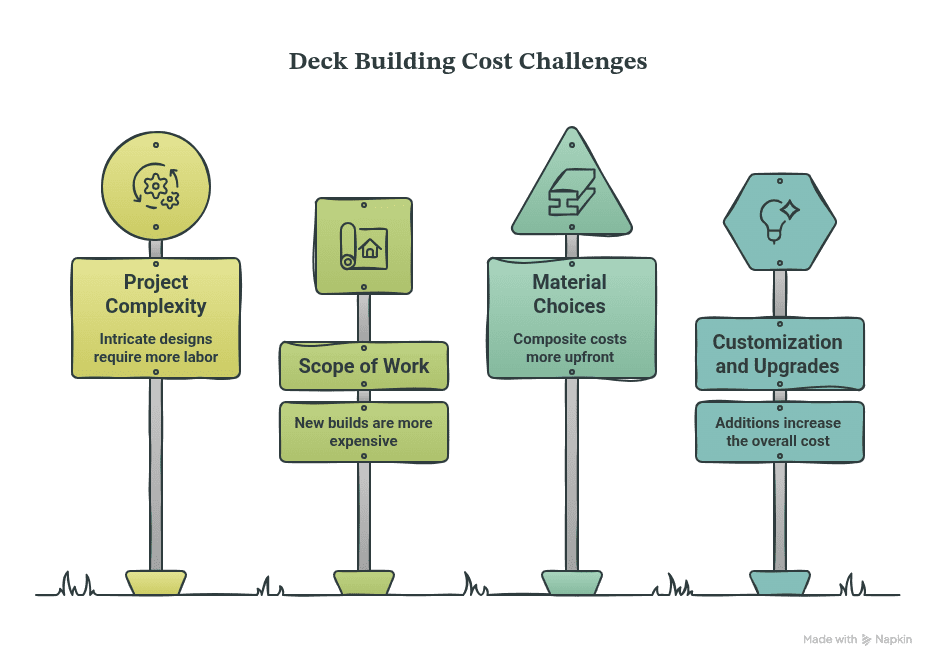
Project complexity is the biggest one. A straightforward 12×12 platform deck with standard railings is a fundamentally different job than a multi-level build with custom angles, a significant grade drop, or integrated stairs. The more intricate the design, the more labor and precision it requires and that’s reflected in the final cost. 

Scope matters just as much. A resurfacing project, replacing boards and railings on a substructure that’s still solid, starts around $6,600 for a 10×10 deck. A new composite deck with handrail and steps starts around $15,000 for the same footprint. A new porch starts around $20,000 for the roof and structure. These aren’t arbitrary numbers; they reflect real differences in the size and complexity of what’s being built. For reference, quality composite builds in Charlotte typically run $30–60 per square foot installed. That range reflects real differences in materials, complexity, and craftsmanship.

Material choices shift both upfront cost and long-term cost. Pressure-treated wood is less expensive on day one. Composite and PVC cost more upfront and significantly less over time with no refinishing, no rot, and no staining every few years. In a climate like Charlotte’s, where humid summers and occasional winter freezes work on wood year-round, that math matters more than it does in drier markets.

Customization and upgrades complete the picture. Deck lighting, privacy screens, outdoor kitchens, pergolas, and firepits add real cost and real value. Some of them also add meaningfully to resale value, which is worth weighing when you’re scoping the project.

The Case for Spending on Quality in the Carolinas

Here’s what most homeowners don’t fully account for until they’re a few years in: Charlotte’s climate is genuinely hard on outdoor structures. The combination of summer humidity, UV exposure, and winter freeze-thaw cycles accelerates wear, especially on wood. Splinters and fading are the visible problems. The more common culprits are subtler: the top rail board and post caps that collect standing water and rot from the inside, the post bases where moisture gets trapped against hardware, the places damage builds quietly until it becomes a safety issue or a full replacement.

Carolina Decks specializes in premium materials: composite decking, aluminum railings, quality hardware. These products cost more upfront because they’re engineered to protect your investment over the long haul. A powder-coated aluminum railing won’t rot, warp, or need refinishing for 10 to 15 years. A quality composite deck board holds its color and structure without annual sealing. You get a beautifully designed deck that hold its value year after year without costly maintenance.

Run the honest 10-year math. Add up the lower upfront cost of pressure-treated wood, then add annual maintenance time, refinishing every three to five years, and the real possibility of post or board replacement somewhere in the middle and the perceived savings evaporate quickly. For most homeowners, quality materials cost less over a full ownership window. The exception is if you genuinely enjoy hands-on seasonal maintenance and the natural wood look is non-negotiable. That’s a valid call, and we’ll support it either way.

What to Expect at Each Level

If your existing deck structure is in solid shape, resurfacing is a viable option. You can get new boards, updated railings, and modern touches, all without the cost of a full rebuild. Starting around $6,600 for a 10×10, it’s the highest-value entry point for homeowners whose substructure has held up. Not sure whether your existing structure qualifies? It’s one of the most common questions we get. The short answer: it depends on the condition of your subframe, posts, and hardware and it’s something we assess during your consultation.

A new composite deck (using premium brands like Trex or TimberTech) is the most common build we do. Standard sizes run 12×12 or 12×16, fully customizable by layout and material. Starting around $15,000 for a 10×10 with handrail and steps, this is where most homeowners land when they want a durable, low-maintenance outdoor space that performs for the long haul.

A new porch, whether you want an open-air layout, a classic screened porch, or an EzeBreeze three-season room, starts around $20,000 for the roof and structure added to an existing deck or patio. If you’re building the porch and the deck together, budget for each component separately. Porches add year-round usability and consistently rank among the highest-return outdoor upgrades.

Our custom porch builds can go even further: multi-level layouts, retractable screens, infrared heaters, vaulted ceilings, integrated hardscaping. We love to design for homeowners who want the space to feel like a genuine extension of the house. We handle all building permits on your behalf across Mecklenburg, York, and Cabarrus counties, so whether you’re building in Lake Norman, Fort Mill, Waxhaw, Matthews or the rest of the Charlotte metro, it’s never something you need to manage.

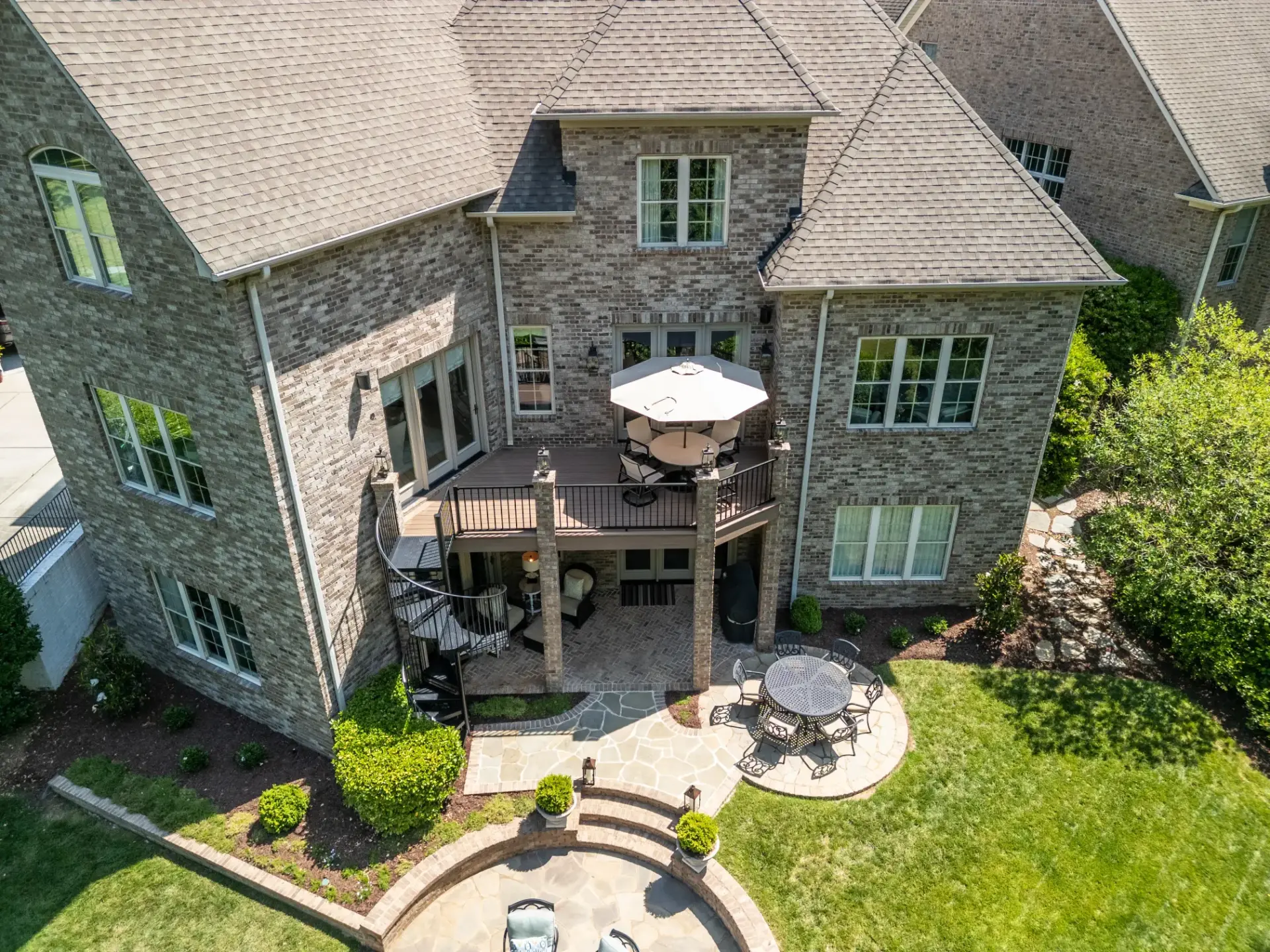
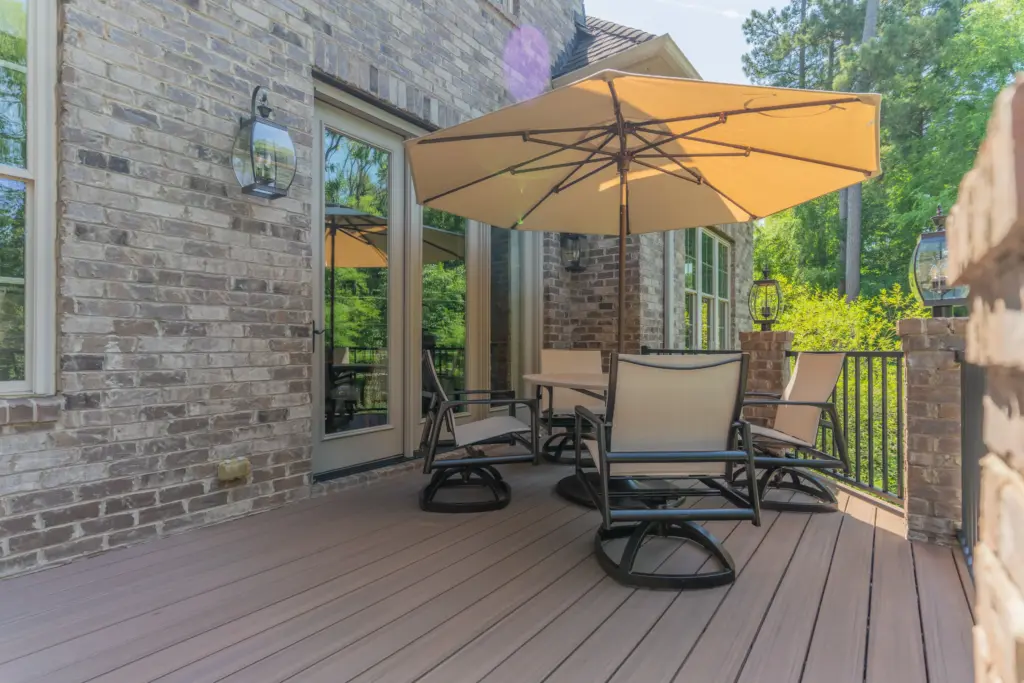
Close-up view of premium TimberTech Black Walnut composite decking boards installed on an elevated brick home's back deck with patio furniture and an umbrella.

How We Handle Pricing

Every project starts with a consultation where we learn your goals, take site measurements, and come back with a tiered proposal so you can see real options at different price points before committing to anything. We walk you through photos of past work so you can see what’s possible at different levels, give you clear proposals with options so you can choose what fits your priorities and budget, and adjust scope or materials if something needs to change, without compromising what makes the build worth doing.

We work with a wide range of budgets. Whatever you’re dreaming for your backyard, we’ll give you a straight answer on what’s possible and what we’d actually recommend for your specific situation. And if budget timing is a factor, we offer financing so you can build now and pay over time.

If you’re dreaming of a new deck this summer, now is the time to get on the schedule. Book a free estimate or call us at (980) 414-0320.
Looking for more pricing information? Check out our handy Pricing Guide or get real cost ranges for projects in our Gallery!

And for a real Carolina Decks project, read our previous blog post.

Hidden Fasteners vs Face Screws: What the Best Charlotte Decks Have in Common

Face Screws or Hidden Fasteners: Here’s the Difference

Every deck board has to be anchored to the joists beneath it, that’s what keeps the surface stable, safe, and structurally sound underfoot. The question is how, and the answer shapes everything from how the finished surface looks to how the decking material performs over the long term.

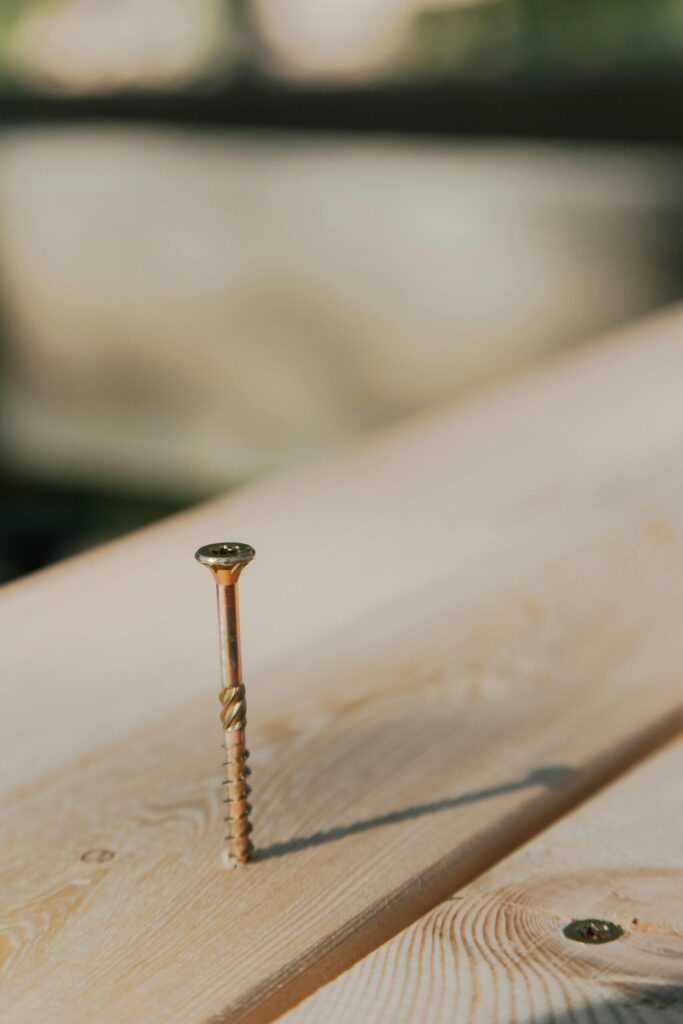
  • Face screws go straight through the top of the board and into the joist below, leaving a grid of screw heads visible across the finished surface. It’s structurally sound, but you’re essentially looking at the fastening system every time you step outside.
  • Hidden fasteners work differently. They clip into a grooved edge along each board and are installed from the side, with no hardware visible on the surface. The deck looks the way it was designed to look: clean, uninterrupted, and visually appealing from edge to edge.

Both methods hold the boards securely. The difference is entirely about beauty, longevity, and surface integrity.


The Case for Hidden Fasteners

There’s a reason hidden fasteners have become the standard on quality custom builds and it goes well beyond a great design.

  • A deck surface worth showing off. With no visible hardware, the natural character of your decking material takes center stage. Whether you’re working with composite deck boards, PVC decking, or tropical hardwoods, hidden fasteners let the product speak for itself. That matters when you’ve invested in premium materials.

  • Moisture protection that pays off over 30 years. Every screw hole is a potential entry point for water. In Charlotte, where spring and summer bring consistent rainfall, that’s an important concern. Hidden fasteners eliminate those penetration points entirely, protecting the board from the inside out and when paired with quality corrosion-resistant fasteners, you’ve built something genuinely engineered to last.

  • Warranty compliance. This one surprises a lot of homeowners. Composite decking manufacturers, including industry leaders like TimberTech and Trex, typically recommend or even require hidden fasteners as part of their product specifications in order to maintain full warranty coverage. If your contractor is installing composite deck boards with face screws as the default, the warranty on that material may be void before the first season is over. 

    As a TimberTech Platinum contractor, their highest certification tier, Carolina Decks is trained on their full product line and know exactly which fastener systems keep that warranty intact. We install CAMO hidden fastener systems as our standard: a purpose-built clip engineered specifically for grooved composite and hardwood boards. For us, fasteners are not an afterthought, they’re essential to a system designed to work with the decking, not just against the joist.

  • Room to breathe. Hidden fasteners allow decking boards to expand and contract naturally. And in Charlotte, where summers are long and humid and temperatures swing dramatically between seasons, that movement is real. Screw holes create stress concentration points that lead to cracking and splitting over time. Eliminate the holes, and you extend the life and wear resistance of the surface considerably.

  • Curb appeal that you actually live in. Homes with hidden fastener decks consistently photograph better, show better, and signal quality to anyone who knows what they’re looking at. Which is great if you ever sell, but honestly, it matters more on a Saturday afternoon when you’re out there living in it.

When Face Screws Are the Right Call

We believe in being straight with you, and the truth is, face screws aren’t always the wrong answer.

Repairs and board replacement on existing decks. Hidden fastener systems make it significantly harder to remove and replace individual boards. If you’re patching into an older deck rather than doing a full custom build, face screws give you flexibility.
Pressure treated lumber with a painted or stained finish.When treated wood is getting a solid surface finish anyway, the hardware disappears under the coating. In those situations, hidden fasteners can add cost without a visible return.
Complex geometries.Tight radius cuts, unusual angles, or intricate patterns can be more practical to execute with face screws. A skilled contractor will tell you when the design calls for it.
Budget-first builds. Hidden fasteners typically add $1–3 per square foot in material and labor. For homeowners prioritizing a long-term investment, that’s an easy decision. Face screws remain a practical choice for simpler builds and are the more budget-friendly option for projects where finish takes a back seat to function.
The key is that the choice should always be intentional, made based on your specific project, your materials, and your goals, not just defaulted to because it’s faster.

The key is that the choice should always be intentional, made based on your specific project, your materials, and your goals, not just defaulted to because it’s faster.


What to Ask Your Contractor

Before you sign anything, these questions will tell you a lot about who you’re working with.

  1. “What fastener system do you use as your standard?” A quality contractor has a preference and a reason for it. Vague answers here are a yellow flag.
  1. “Does the decking manufacturer recommend hidden fasteners for this product?” If the answer is yes and the contractor is proposing face screws anyway, ask why. A quality contractor should have a clear, legitimate reason.
  1. “Will my warranty be affected by the fastener choice?” This is a real and important question for any composite or PVC decking product. 
  1. “What fastener system are you using and is it engineered for this specific decking product?” Not all hidden fasteners are created equal. We use CAMO clip systems precisely because they’re designed to work with grooved composite and hardwood boards, not generic hardware that happens to be out of sight.

If a contractor is proposing composite decking with face screws as the default and can’t give you a clear reason why, push back. It’s almost always the wrong call for a long-term investment.


Hidden fasteners are one of those details that separates a deck that looks great in year one from one that still looks great in year ten. At Carolina Decks, we’d love to walk you through the materials and methods we use on every build and show you the difference in person.

Ready to talk through your project? We start with a conversation: no obligation, no site visit until you’re ready. Schedule a call with our team and we’ll walk you through materials, design options, and what a Carolina Decks build actually looks like from start to finish.

Looking for inspiration? Check out our Project Gallery or read our previous blog post.