
Your deck is probably one of the most-used spaces around your home. It’s where you grill dinner, entertain friends, and spend time outside with family. But when was the last time you thought about what’s holding it up?
Most homeowners don’t give their deck’s structural condition much thought until something goes wrong. And while faded boards, peeling stain, or loose railings are easy to spot, some of the most serious deck safety concerns are hidden beneath the surface.
A professional deck inspection can help identify these issues before they become larger, more expensive, or potentially dangerous problems.
Why Do You Need a Deck Inspection?
Decks are exposed to the elements year-round. Here in the Charlotte area, our hot, humid summers, frequent rainfall, and seasonal temperature changes can take a toll on outdoor structures.
Over time, moisture can cause wood to deteriorate, metal connectors can corrode, and structural components can weaken. Even a deck that was properly built may develop issues as it ages.
And not every deck was properly built in the first place.
Building codes, construction practices, and fastening requirements have evolved over the years. An older deck may have been built using methods that are no longer considered acceptable, or it may have construction defects that were never identified.
The challenge is that many of these problems aren’t obvious from the surface. A deck can look great from above while having deteriorating framing, inadequate connections, or other structural concerns underneath.
That’s where a professional deck evaluation comes in.
What Does a Professional Deck Inspection Include?
A deck inspection is much more than a quick walk around looking for rotten boards.
At Carolina Decks, our deck evaluations follow the comprehensive inspection framework developed by the North American Deck and Railing Association (NADRA), an industry organization dedicated to advancing deck safety, education, and professional standards.
Our inspectors use a detailed digital evaluation form to systematically assess & document the deck’s visible and accessible components, including:
1. Footings, Posts, and Structural Supports
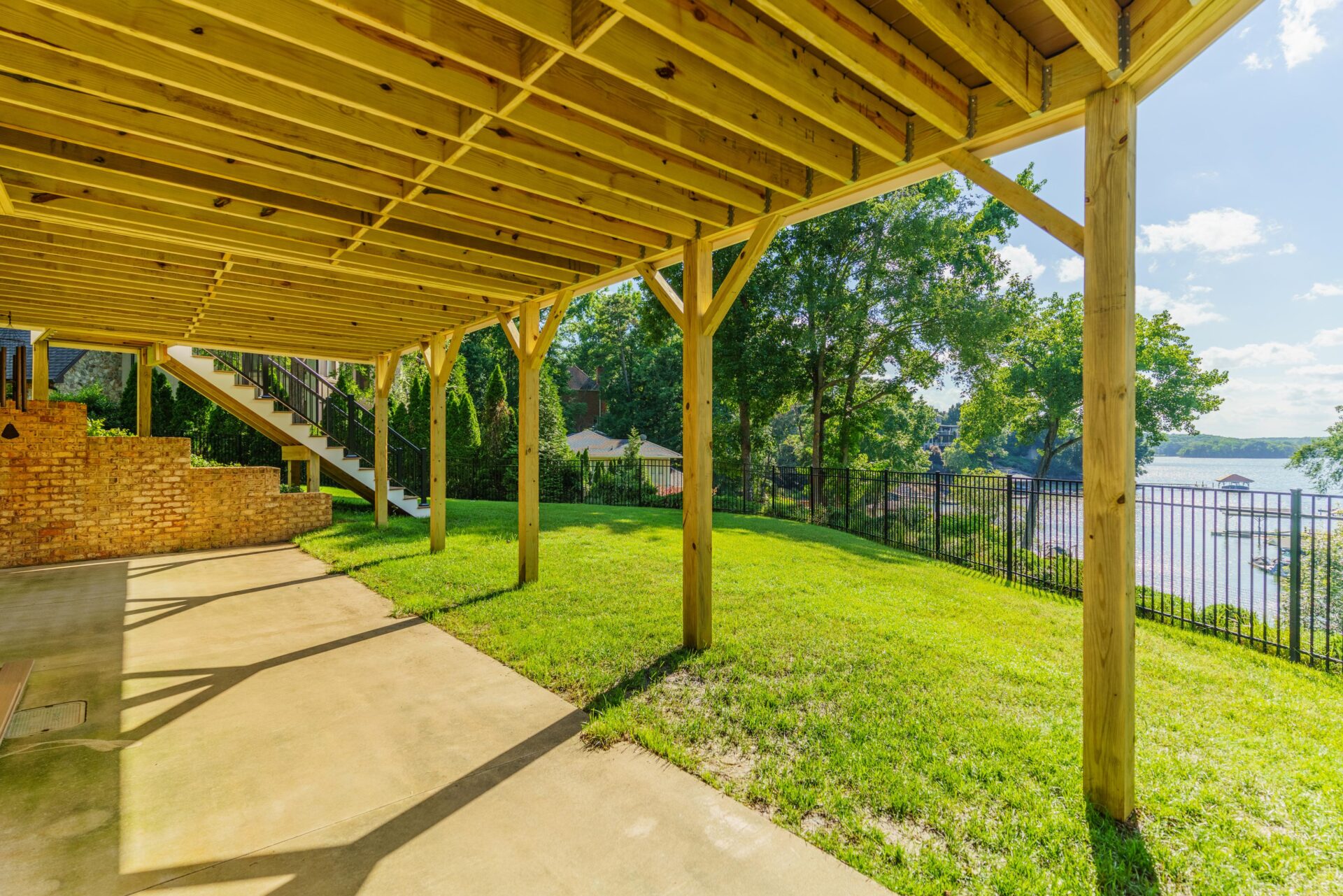
Every deck relies on a foundation and supporting structure to carry its weight. We evaluate visible footings, support posts, beams, and their connections for signs of deterioration, improper installation, or inadequate support.
2. Deck Framing and Joists
Underneath the decking, the framing system supports the entire walking surface. We examine accessible beams, joists, hangers, and structural connections, looking for issues such as wood decay, corrosion, missing fasteners, or improper installation.
3. Ledger Board and House Connection
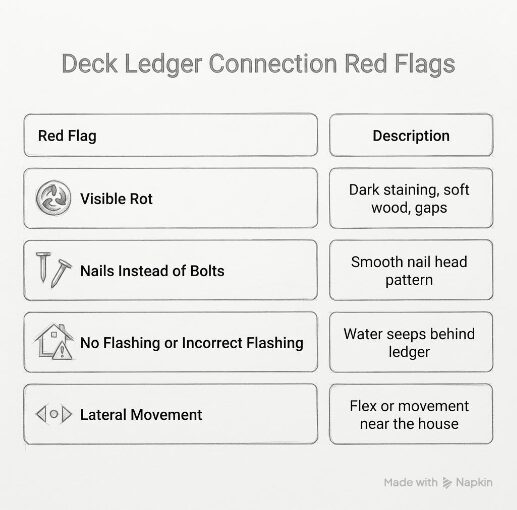
For decks attached to a home, the ledger board is one of the most critical structural components.
This connection helps secure the deck to the house, and improper fastening or water intrusion can create serious safety concerns. Our evaluation includes examining accessible ledger connections, fasteners, and flashing to identify visible problems.
4. Railings and Guardrails
A railing might feel sturdy during everyday use but still lack the structural connections needed to withstand significant force. We examine railing height, post connections, spacing, and visible signs of deterioration to help identify potential safety hazards.
5. Stairs and Handrails
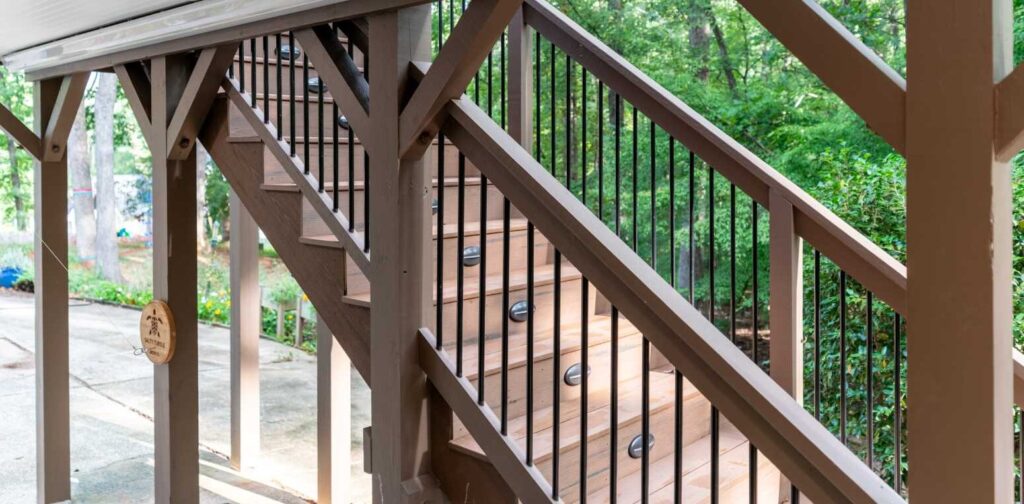
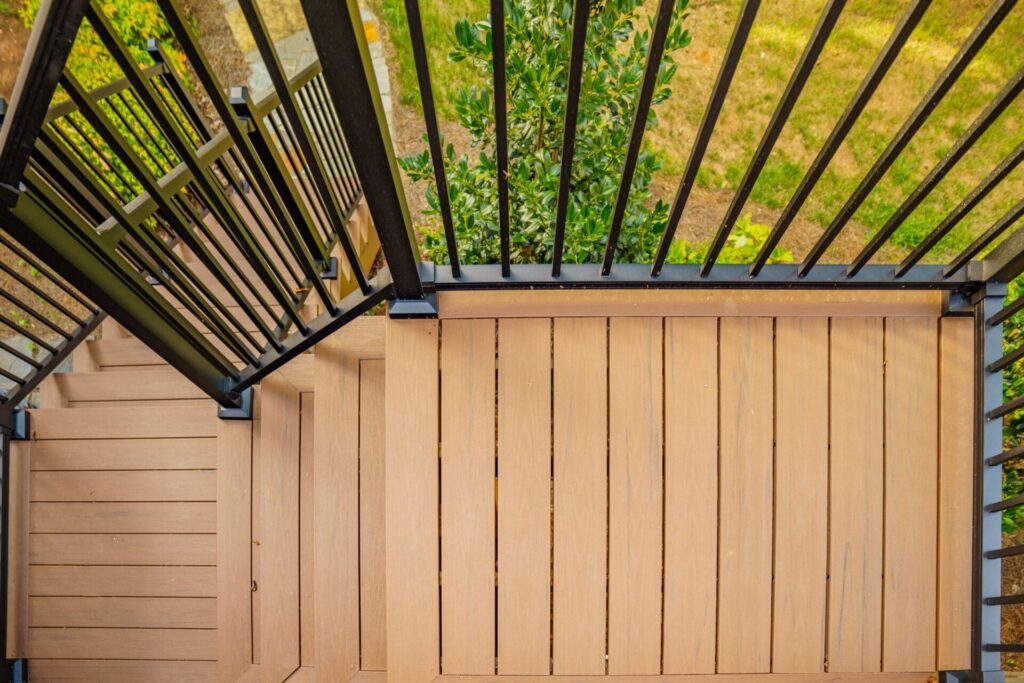
Deck stairs experience frequent use and require proper support, consistent dimensions, and secure connections. We evaluate the stair structure, treads, risers, handrails, and landings for visible safety concerns.
6. Decking Surface and Fasteners
Finally, we examine the deck boards themselves for deterioration, cracking, loose or exposed fasteners, and other conditions that could create hazards or indicate underlying problems.
Together, these areas give us a comprehensive understanding of your deck’s visible condition, from the decking surface to the structural components that support it.
When Should You Have Your Deck Inspected?
You don’t need to wait until your deck shows signs of damage to schedule an inspection.
A professional evaluation is especially worth considering if:
- Your deck is more than 10 years old. Age alone doesn’t determine whether a deck is safe, but older structures deserve closer attention, particularly if they’ve never been professionally evaluated.
- You’ve recently purchased a home. A standard home inspection may not include a detailed evaluation of the deck’s connection points and construction.
- You notice movement, sagging, or loose railings. These can be warning signs of structural problems that should be addressed promptly.
- You’re planning to resurface or renovate your deck. Before investing in new decking or railings, it’s important to understand whether the existing framing is suitable for reuse.
- You don’t know when or how your deck was built. If the deck’s construction history is unknown, an inspection can help establish its current condition.
- Your deck gets heavy use. If you regularly entertain large groups or have children playing on the deck, understanding its integrity is important.
Even without any obvious concerns, periodic inspections are a sensible part of maintaining an outdoor structure.
What Should You Expect During a Carolina Decks Inspection?
Our deck inspections are designed to give homeowners a clearer understanding of their deck’s current condition.
During your appointment, a trained deck evaluator will examine the visible and accessible components of your existing deck, following our structured digital inspection process based on NADRA’s evaluation guidelines.
Rather than simply looking for cosmetic damage, we’re evaluating how the deck was constructed, how its structural components are connected, and whether there are visible signs of deterioration or potential safety concerns.
The goal is to identify issues that deserve attention and help you make informed decisions about maintenance, repairs, or future improvements.
It’s important to understand that a visual deck evaluation is not the same as a structural or engineering investigation, a licensed real estate home inspection, or a municipal code inspection. Some conditions may be concealed behind finishes, underground, or otherwise inaccessible. Where a connection or structural detail cannot be adequately evaluated, additional investigation by a qualified professional may be recommended.
Is a Deck Inspection Worth the Investment?
A deck inspection is a relatively small investment compared with the potential cost of major structural repairs, premature replacement, or an accident.
It can also help you avoid spending money in the wrong places.
For example, homeowners sometimes consider replacing worn deck boards without realizing that the framing underneath may also need attention. Identifying structural issues before beginning a cosmetic renovation can help prevent wasted materials and unexpected expenses.
On the other hand, an evaluation may reveal that the existing structure is in better condition than expected, helping you make more informed decisions about its continued use and maintenance.
Ultimately, the value of an inspection is in knowing what you’re working with rather than guessing based on how the deck looks.
Schedule a Professional Deck Inspection in Charlotte, NC
At Carolina Decks, we believe understanding the condition of your deck is an important part of keeping your outdoor space safe and functional for years to come.
Whether you’ve lived in your home for decades, recently purchased a property, or are considering improvements to an existing deck, a professional evaluation can help you understand its condition and identify areas that may need attention.
Learn more about our residential deck inspections or request an appointment here.