
Fire Pits and Fireplaces: How to Spot Quality Work
There’s a first cool evening every fall in Charlotte, usually sometime in October, when everyone’s still outside after dinner and nobody wants to go in yet. If you’ve got a fire pit or fireplace, that’s the night it earns its keep. If you don’t, it’s usually the night you start wondering why you don’t.
Fire features are one of the most requested additions we build, and for good reason, they extend your outdoor season by months and turn a deck, patio, or porch into the place people actually want to gather.
But not all fire features are built the same, and the difference between a quality build and a corner-cut one isn’t always obvious until something goes wrong.
Fire Pit or Fireplace: Different Builds, Different Considerations
A fire pit and an outdoor fireplace solve similar problems in genuinely different ways, and the right call depends on your space and how you plan to use it.
- A fire pit is typically a lower, more casual gathering point, often the centerpiece of a patio or the anchor of a deck’s seating area, and works well for groups who want to sit in a circle and talk.
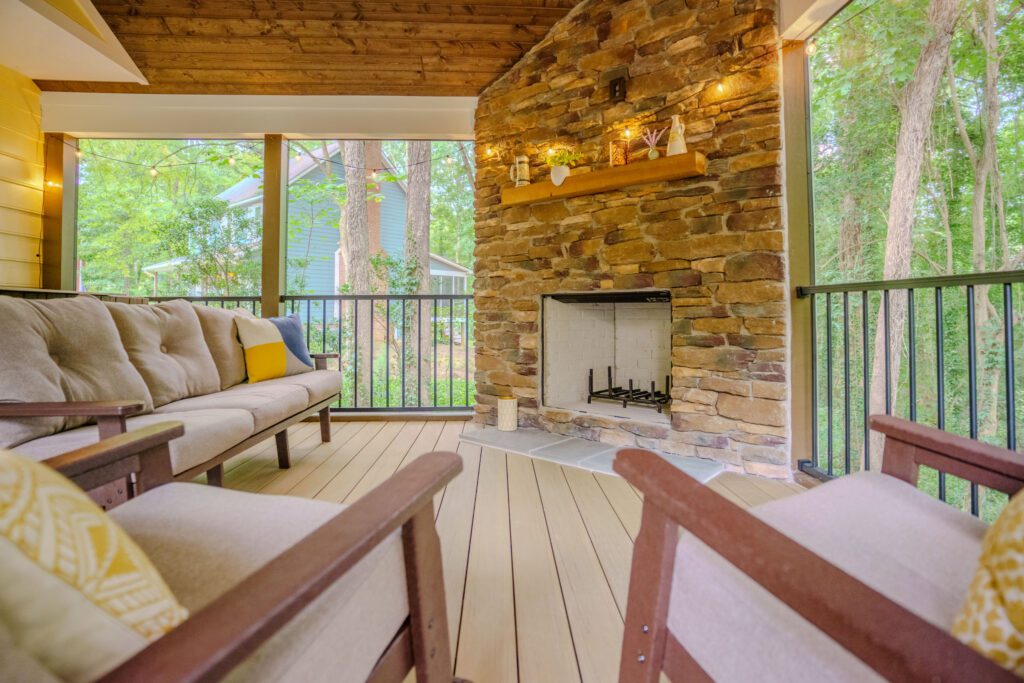
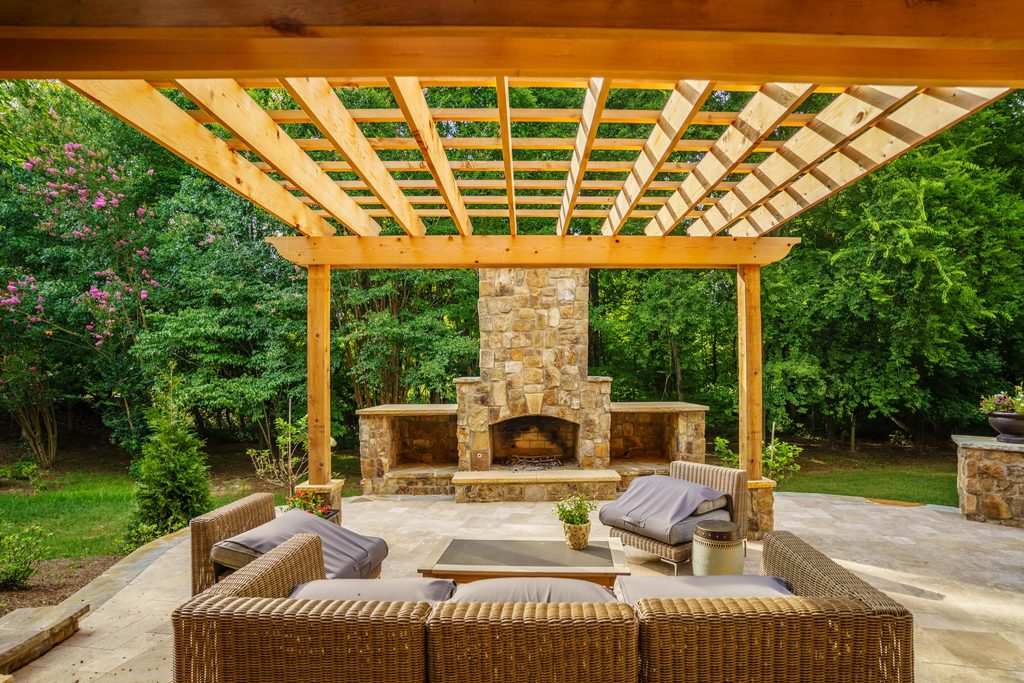
- An outdoor fireplace is a more architectural statement, usually built against a wall or as a standalone structure, and tends to define an outdoor room the way an indoor fireplace anchors a living room.
Both can run on wood or gas, and that choice matters more than people expect: gas gives you instant ambiance with none of the smoke or maintenance, wood gives you the crackle and scent a lot of homeowners are chasing in the first place. There’s no universally right answer, it depends on how you actually want to use the space.
What Separates a Quality Fire Feature Build
This is where it gets technical, and where corners get cut in ways homeowners often don’t discover until years later. Proper clearance is non-negotiable: fire features need real distance from combustible materials, and that distance isn’t a suggestion, it’s dictated by code and the specific materials involved. Footings matter more than most homeowners think about: a masonry fire feature is heavy, and it needs a footing engineered to support that weight without shifting or cracking over time, especially through Charlotte’s freeze-thaw cycles.
But the quality differences that matter most are often in the details nobody thinks to ask about.
- Joist and post sizing around a fire feature needs to account for the added weight and structural demands, not just match the rest of the deck by default.
- Proper flashing where the fire feature meets the structure keeps water from finding its way in over time, a detail that’s invisible once the build is finished but shows up as rot or damage years later if it’s skipped.
- Taped blocking at seams and transitions is another one of those steps that takes extra time and never gets seen, but it’s the difference between a tight, long-lasting build and one that starts failing quietly. And on stairs near a fire feature or anywhere else on the deck.
- Picture-framed stair treads, where the border boards wrap the ends of the stair for a finished look, are a small design detail that signals a builder who’s paying attention to craftsmanship, not just function.
Questions to Ask Before Hiring a Fire Pit or Fireplace Builder
How far does a fire pit need to sit from my deck railing or siding?
Clearance distances are dictated by code and by the specific materials involved, not a general rule of thumb. A contractor who knows what they’re doing can tell you the exact distance your fire feature needs from your railing, siding, or decking, and explain why. Vague or general answers here are a red flag.
Does the joist and post sizing near my fire feature need to be different from the rest of my deck?
Yes. The added weight and structural demands of a fire feature mean joists and posts nearby often need to be sized specifically for that load, not just matched to the rest of the deck by default. Ask your contractor directly whether this has been accounted for in the plan.
What is flashing and blocking, and why does it matter for a fire feature?
Flashing keeps water from getting into the structure where the fire feature meets the deck or porch, and taped blocking reinforces seams and transitions. Neither is visible once the build is finished, but skipping either is a common way builds start failing quietly within a few years. Ask whether both are part of the plan from the start.
What’s a red flag when getting quotes from multiple contractors?
If a contractor can’t speak specifically to clearance distances, joist and post sizing, or flashing and blocking, that’s usually a sign the build won’t hold up the way it should. A builder who knows what they’re doing will have clear, specific answers to all three, not general reassurance.
Quality Fire Pit and Fireplace Builders in Charlotte: What We Never Skip
We build fire pits and outdoor fireplaces as part of larger composite deck, porch and patio, and outdoor living projects across the Charlotte metro, and it’s one of the areas where the gap between “looks fine” and “built right” shows up fastest.
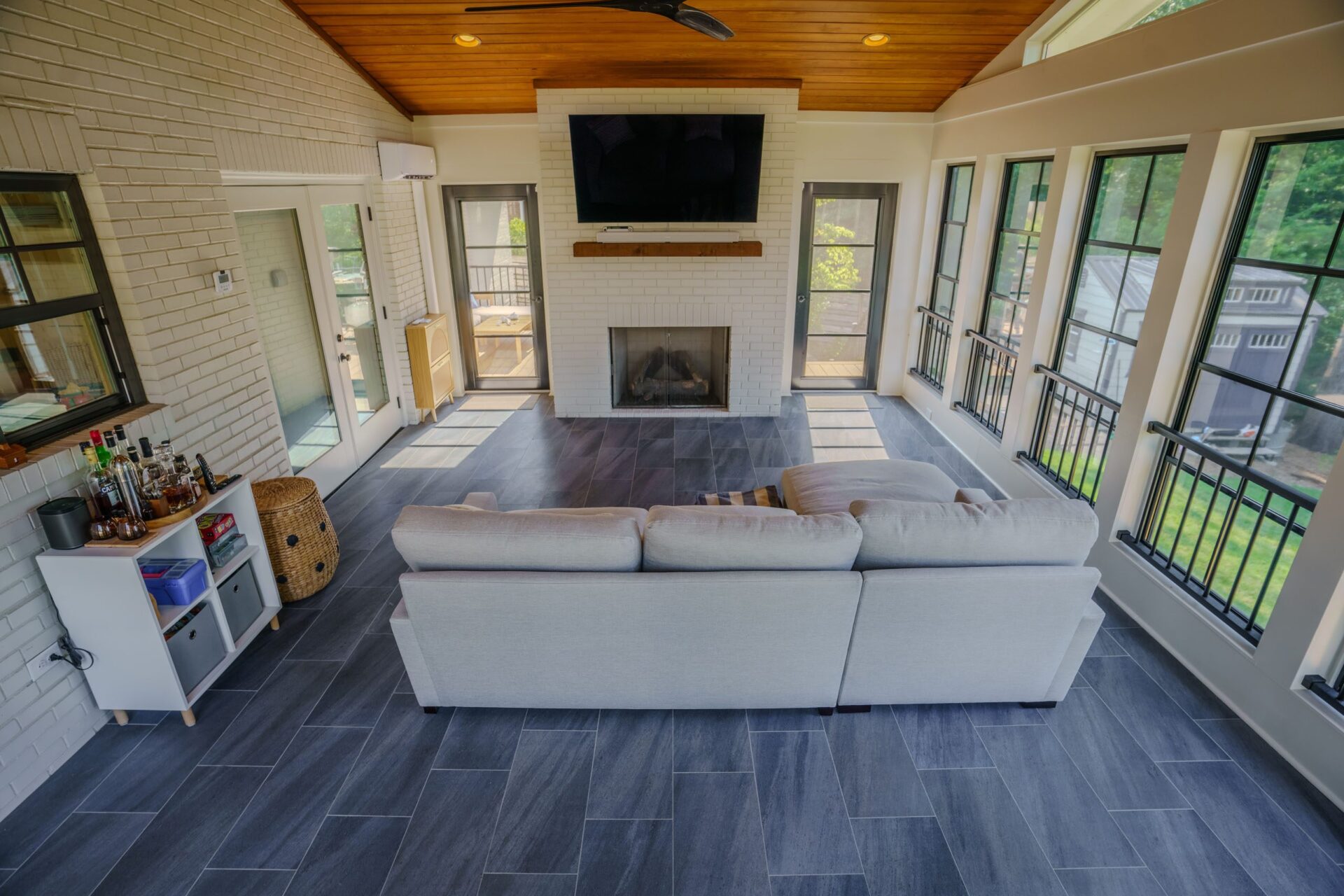
We spec proper footings, correct joist and post sizing, flashing, and taped blocking on every fire feature we build, along with finishing details like picture-framed stair treads, whether it’s a simple gas fire pit or a full stone fireplace anchoring a screened porch. It’s not the most exciting line item to explain to a homeowner, but it’s the one that determines whether your fire feature, and the deck around it, is still solid in ten years, or a problem you’re dealing with in three.
It’s part of why we build exclusively with premium materials and construction standards, the visible finish is only half the story; what’s underneath is what actually protects your investment.
A Fall Detail Worth Mentioning
If a fire feature is part of a larger deck or screened porch build you’re considering, our September offer applies: book a new deck or screened porch construction project by September 30th, 2026 and we’ll include a complimentary deck lighting package at no extra cost. Fire features and lighting tend to go hand in hand anyway, both are about making your outdoor space usable long after the sun goes down. Full terms are on our special offer page.
Building It Right, the First Time
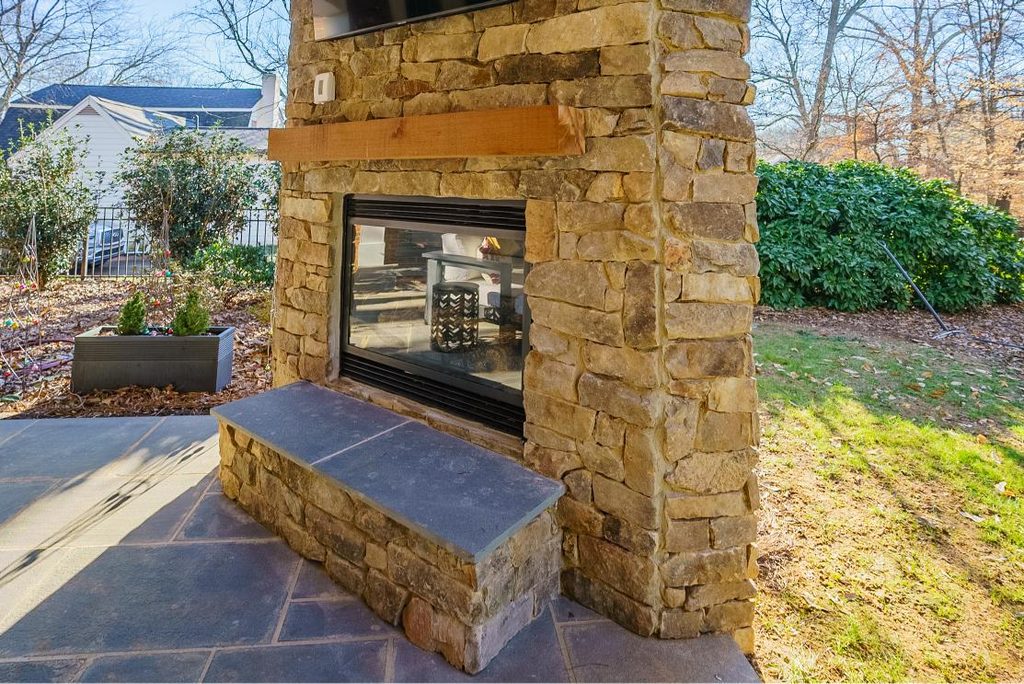
Whether you’re picturing a stone fireplace anchoring a screened porch in Myers Park or a simple gas fire pit for weeknight dinners on a deck in Matthews, the build quality behind the feature matters more than the design on top of it.
We’re happy to walk through what a proper fire feature build looks like for your specific space, clearances, footings, materials, all of it, before you commit to anything.
Book a free estimate or call us at (980) 414-0320.