
Why Standing Water Is One of the Biggest Threats to Your Deck (And Why We’re Passionate About Drainage)
Charlotte summers are gorgeous. They’re also humid, stormy, and hard on outdoor structures in ways that homeowners don’t always anticipate until the damage is already done. One of the most common and preventable problems we see on existing decks across the Charlotte metro, from Lake Norman to Waxhaw to Ballantyne, is standing water.
And while a puddle after a thunderstorm might seem like a minor inconvenience, the long-term consequences are anything but. Rain, snow, and seasonal freeze-thaw cycles work on your deck year-round, and a drainage system that wasn’t designed right from the start gives that moisture every opportunity to do serious damage.
Where Water Hides (And Where It Does the Most Damage)
The visible problems, fading, surface staining, the occasional slippery spot, are actually the least of your worries. The real damage from standing water happens in places you can’t easily see, and by the time it becomes obvious, the repair bill is usually significant.
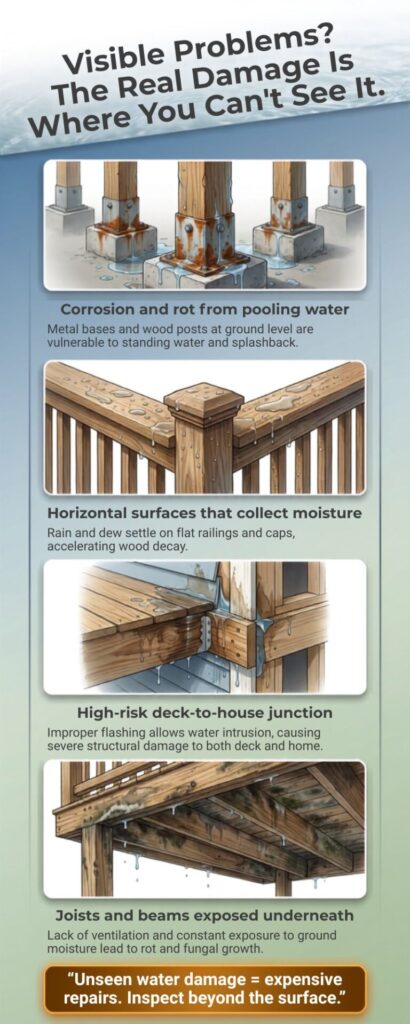
- Post bases and hardware. When water pools at the base of a post and sits against the hardware, it accelerates corrosion and rot from the inside out. By the time it’s visible on the surface, the structural damage is often already well established. A quality drainage system diverts water away from these critical connection points before it has a chance to accumulate.
- Top rail boards and post caps. These horizontal surfaces collect water after every rain and every snow event. Without proper slope and drainage detail, they hold moisture against the wood or composite core for hours or days at a time, through summer storms and winter freezes alike.
- The ledger board connection. Where your deck meets your house is one of the highest-risk zones for water infiltration. Improper flashing combined with poor drainage is one of the leading causes of rot that spreads from the deck into the home’s structural framing. This is the kind of damage that starts invisible and ends expensive.
- The substructure. The joists, beams, and framing that make up your deck’s skeleton are constantly exposed to whatever moisture the surface doesn’t shed. A well-designed outdoor living space treats substructure protection as a non-negotiable because once the framing is compromised, you’re not talking about a repair, you’re talking about a rebuild.
Slope: The First Line of Defense
A properly built deck isn’t flat. It’s designed with a slight slope, typically around an eighth of an inch per foot, away from the house. That slope is subtle enough that you’d never notice it underfoot, but meaningful enough to move water off the surface and away from critical connection points. It’s a design detail that gets built in from the start, and one that’s difficult and expensive to retrofit later.
Board Spacing and Fastener Choice: Details That Pull Their Weight
Proper deck drainage isn’t only about slope and drainage systems, it starts at the surface with decisions that get made during installation. Board spacing matters.
Gaps between decking boards allow water to flow through and off the surface rather than sitting on top. Too tight and you’ve created a surface that holds water. Too wide and you’ve created a trip hazard and a debris collector.
Fastener choice matters too. Hidden fastener systems, which we use on our composite builds, hold screws in place longer than face-fastened boards and eliminate the exposed screw holes that collect water and accelerate surface deterioration over time. It’s a cleaner look and a more durable one, two things that happen to go hand in hand when the details are done right.
Under-Deck Drainage: Trex RainEscape and Haven Under Decking
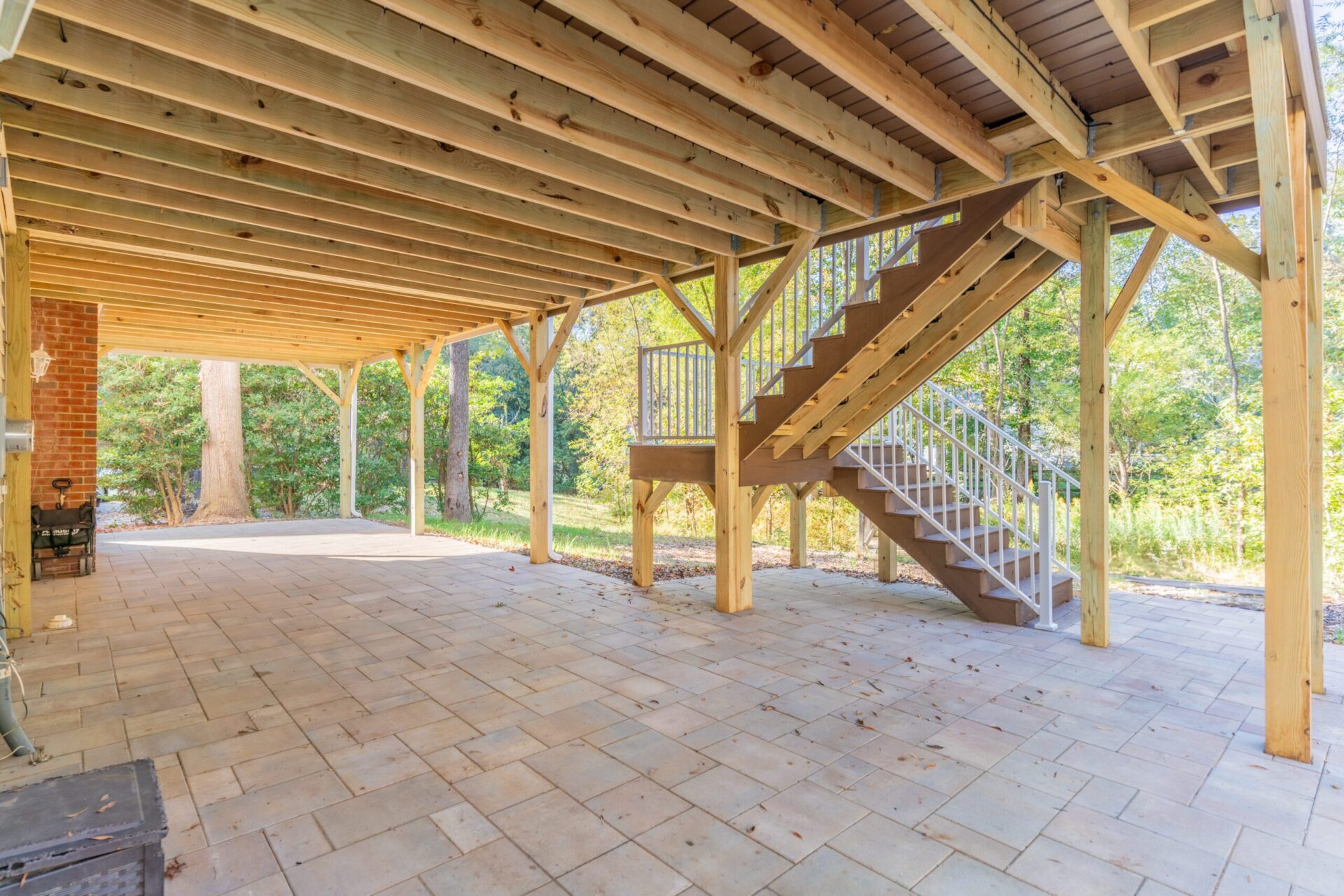
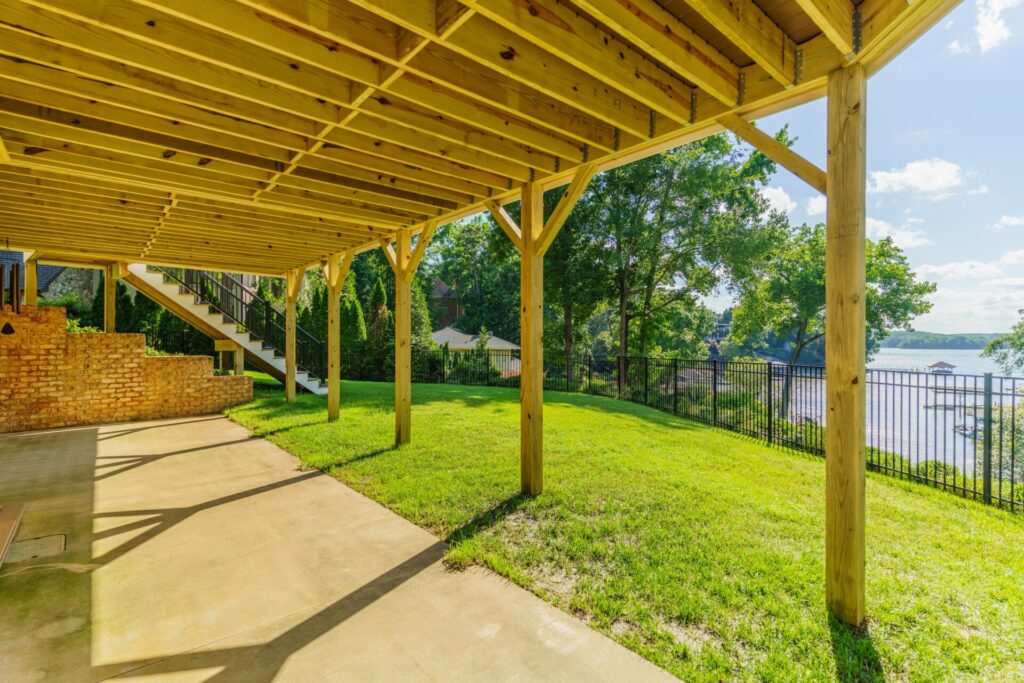
For elevated decks, drainage takes on a second dimension entirely. Without a drainage system, the space under an elevated deck becomes a catch basin, collecting runoff from every rain and snow event, staying perpetually damp, and accelerating decay on the framing below. It also means the area under your deck is essentially unusable, which is a significant missed opportunity for most homes.
We install two best-in-class under-deck drainage systems depending on the project: Trex RainEscape and Haven Under Decking. Both are engineered to capture water that passes through the deck surface and channel it to the perimeter, creating a dry, protected space below whether that means a covered patio, additional storage, or simply clean framing that lasts the life of the structure.
These systems integrate with the build rather than being retrofitted awkwardly after the fact, and they make a dramatic difference in both the longevity of your deck and the livability of the space beneath it.
The difference between an elevated deck with a proper drainage system and one without isn’t just about protecting the substructure. It’s about the outdoor living square footage you actually get to use. A dry space under your deck is usable space for a patio, a covered seating area, or even just protected storage. A wet one isn’t.
Rain and Snow: A Year-Round Problem in the Carolinas
It’s easy to think about deck drainage as a summer concern, Charlotte gets significant rainfall from April through September, and the thunderstorms can be intense. But winter deserves equal attention.
Snow and ice that accumulate on a deck surface and then melt slowly are particularly hard on wood, working their way into any crack or fastener hole and expanding as temperatures drop again overnight. A deck that sheds water efficiently in July handles freeze-thaw cycles better in January. The drainage system you build in from the start is doing its job twelve months a year, not just during storm season.
Material Choice Makes a Difference Here Too
Wood and composite behave very differently in wet conditions. Pressure-treated wood, even when properly sloped and detailed, will absorb moisture, swell, and eventually check and split. Composite and PVC decking are engineered to be dimensionally stable, they don’t absorb water the way wood does, which means the drainage strategy we build in works as intended rather than fighting against the material itself.
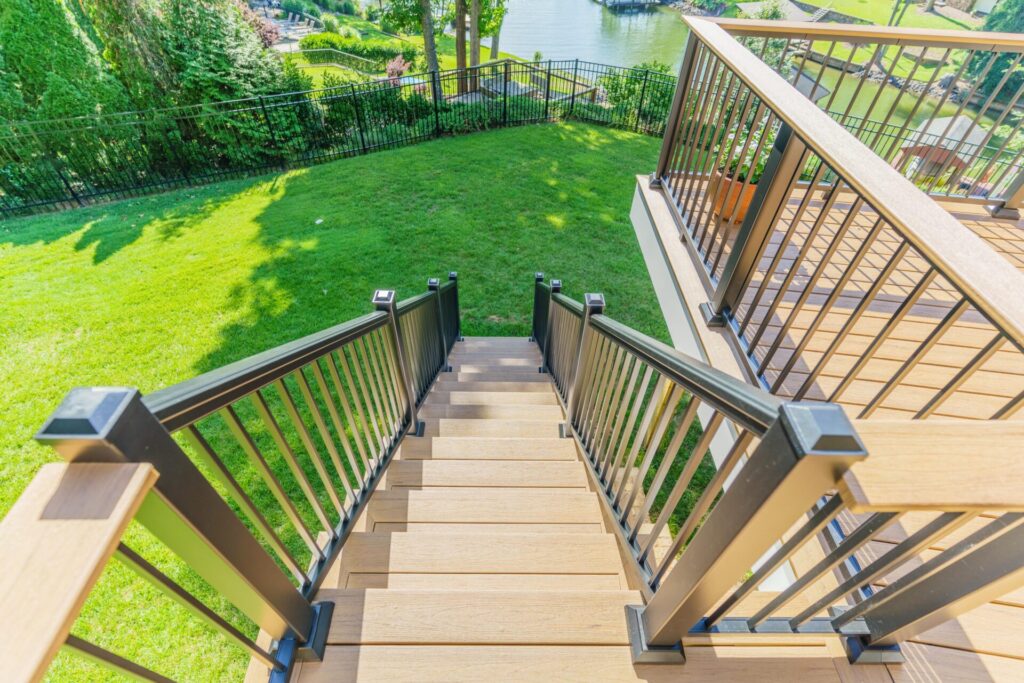
Aluminum railings follow the same logic. No rot, no corrosion concern at the post bases, no moisture wicking up through end grain. It’s a system approach with every component working together to divert water away from the structure, protect the substructure, and protect the investment for the long haul.
What This Means for Charlotte Homeowners
The Charlotte climate (humid summers, occasional hard freezes, heavy spring storms) is genuinely demanding on outdoor structures. The homes in Southpark, Dilworth, Cornelius, and Weddington that have decks holding up beautifully after 15 years almost always share a common thread: they were built with drainage as a design priority, not an afterthought.
If you’re evaluating a new deck build or wondering why your existing deck has started showing its age faster than expected, drainage is one of the first places we look. It’s not the most glamorous part of the conversation, but it’s one of the most important ones we have with clients and it’s one of the clearest differentiators between a deck that holds its value and one that becomes a liability.
Book a free estimate and let’s talk through what a properly designed, properly drained outdoor living space looks like for your home.
Interested in seeing more? Explore our Our Gallery page to get design inspiration or read our previous blog post.