
What is a Lien Waiver? Protecting Your Charlotte Deck or Porch
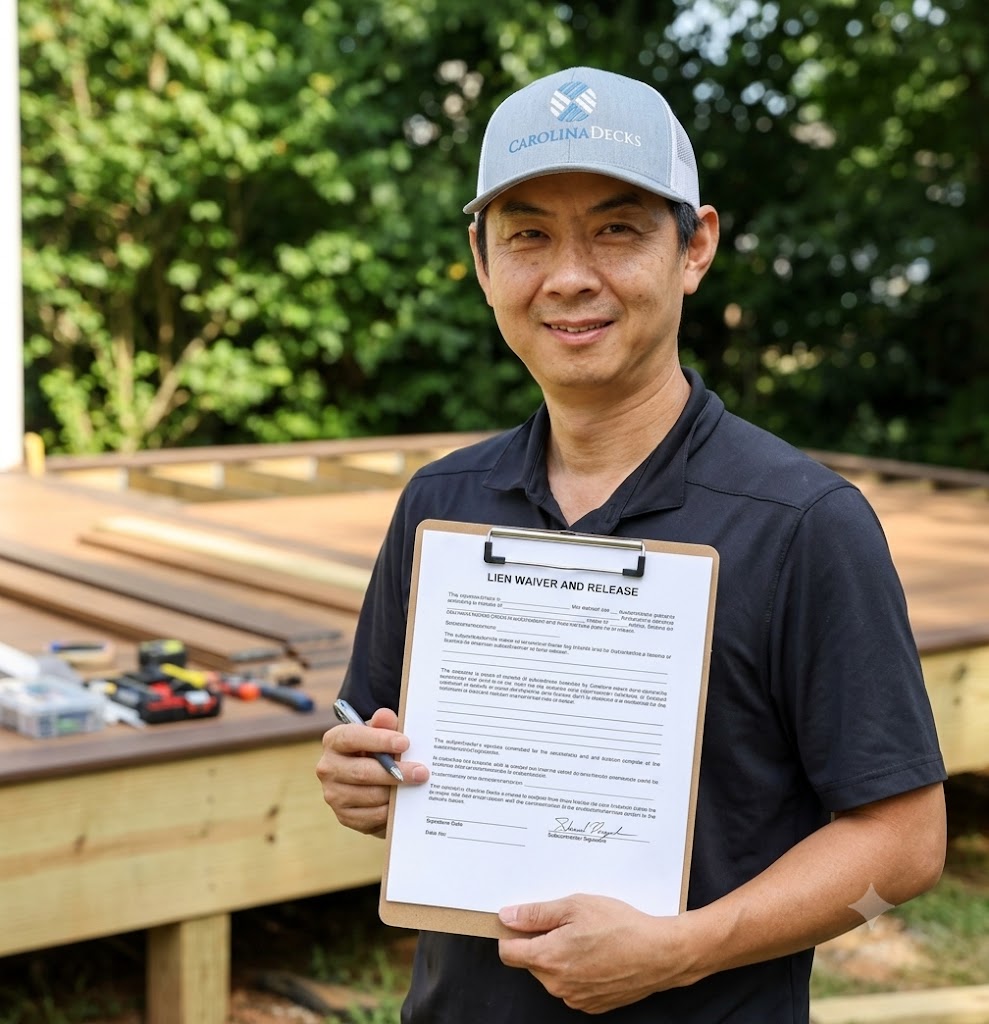
If you’ve never built a custom outdoor space before, “lien waiver” is probably not a phrase you hear often. But it’s one of the most important pieces of paper in the entire process, and at Carolina Decks we believe that understanding the basics helps you go into your project with confidence instead of guesswork.
What a Lien Waiver Actually Is: A Charlotte Homeowner’s Guide
In the simplest terms, a lien waiver is a receipt with legal teeth. When a contractor, subcontractor, or supplier is paid for their work or materials, a lien waiver confirms that payment was received and that the party is giving up their right to file a claim against your property for that amount.
It’s the paperwork that closes the loop between “we paid for this” and “this can never come back to bite us.”
Here’s why that matters more than most homeowners realize. In North Carolina (and nearby South Carolina), paying your general contractor in full doesn’t automatically protect your home from subcontractor claims if the GC fails to pay their suppliers. If that contractor doesn’t pass payment along to a subcontractor or supplier, that unpaid party can, in certain circumstances, file a claim against your property, even though you already paid for the work.
It sounds counterintuitive, and it is, but it’s exactly why lien waivers exist: they create a paper trail showing everyone up and down the chain has actually been paid.
Why This Matters for a Deck or Porch Build in North Carolina
A custom outdoor living project involves more moving pieces than most homeowners expect. Framing crews, composite decking suppliers, railing installers, electricians for your lighting package, the list adds up. Every one of those parties has lien rights under North Carolina law.
A well-run builder manages this on your behalf so you never have to think about who’s been paid and who hasn’t. That’s exactly the kind of thing that should be invisible to you as the homeowner, not something you have to chase down after the fact.
What We Believe Homeowners Deserve to Know
We think the honest answer here is simple: you deserve a builder who handles this proactively, not reactively. That means a payment and documentation process built around protecting you from day one, not scrambling to produce paperwork if a question comes up later.
It also means being upfront that construction payment law has real nuance to it, and if you ever have a project-specific question about lien rights or your specific contract, that’s a conversation worth having with a real estate or construction attorney. We’re deck builders, not lawyers, and we think that distinction matters.
A Word on Due Diligence
If you’re vetting builders for a custom deck, porch, or outdoor living project in the Charlotte metro, this is a fair question to ask upfront: “How do you handle lien waivers on a project like mine?”
A builder who has a clear, confident answer is telling you something important about how they run their business. A builder who seems unfamiliar with the term is worth a second look.
We manage this as part of how we run every project, from a resurfacing job in Matthews to a full custom porch build in Lake Norman. It’s not the most exciting part of building your dream backyard, but it’s part of what “we handle it so you don’t have to” actually means in practice.
Lien Waivers: The Bigger Picture
Most homeowners come to us thinking about composite decking colors, railing styles, and whether to add a fireplace. That’s the fun part, and we love talking through it with you. But the less glamorous side, contracts, payment schedules, waivers, is what makes sure the fun part actually stays fun. A beautiful new deck loses its shine fast if it comes with a payment dispute attached.
If you want to learn more about how North Carolina lien law protects homeowners, this homeowner’s guide to mechanics’ liens is a solid starting point, though we’d always recommend a conversation with an attorney for anything specific to your project.
Frequently Asked Questions About Lien Waivers in NC
Q: What is a lien waiver in North Carolina construction?
A: A lien waiver is a legal document signed by a contractor, subcontractor, or supplier confirming they have received payment and forfeit their right to file a mechanics’ lien against the property for that amount.
Q: Does paying my general contractor protect me from subcontractor liens in NC?
A: No. Under North Carolina law (NCGS Chapter 44A), paying your general contractor in full does not automatically clear subcontractor lien rights if the contractor fails to pay their sub-crews or suppliers.
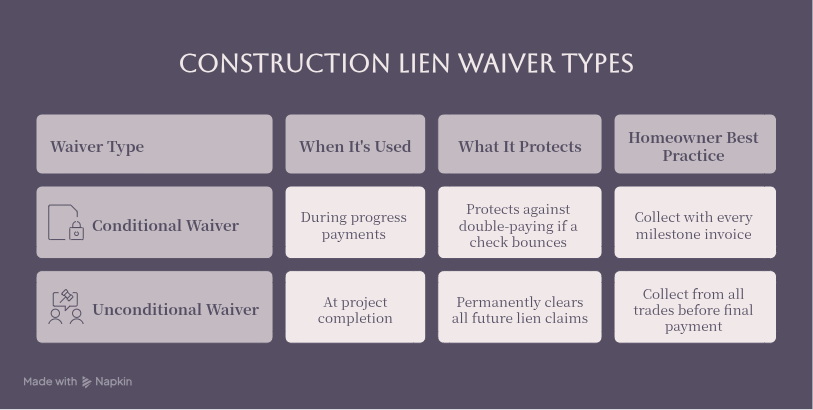
Q: What is the difference between a conditional and unconditional lien waiver?
A: A conditional waiver takes effect only after the payment actually clears the bank. An unconditional waiver takes effect immediately upon signing, regardless of whether the check clears.
Ready to Build With Confidence?
Whether you’re planning a resurfacing project, a new composite deck, or a full custom porch across Mecklenburg, York, or Cabarrus counties, we handle the details, including the paperwork, so you can focus on picturing yourself out there.
Book a free consultation or call us at (980) 414-0320.
Disclaimer: This article is for general educational purposes and is not legal advice. For guidance specific to your project or contract, consult a licensed attorney.